Abstract
When do external threats strengthen security community cohesion, and when do they produce fragmentation? Security community theory has generated substantial insight into how communities form and maintain peaceful relations among members but has largely neglected how communities respond to external existential threats. This paper addresses this gap by developing a conditional theory of security community resilience specifying three scope conditions that determine whether external challenges reinforce or undermine collective solidarity: threat framing congruence with constitutive values, institutional activation capacity enabling coordinated response, and burden distribution legitimacy sustaining member commitment. The theory is tested through structured comparison using NATO (North Atlantic Treaty Organization) as the primary case. Temporal comparison of NATO's responses to Russian aggression in 2014 versus 2022 demonstrates that variation in scope conditions rather than threat magnitude accounts for divergent outcomes. Cross-alliance comparison with SEATO (Southeast Asia Treaty Organization) and CENTO (Central Treaty Organization) shows that security community characteristics distinguish successful from failed alliance responses. Intra-alliance comparison reveals that differential identity alignment, framing resonance, and burden-sharing acceptance correlate systematically with member state commitment variation. Process tracing of three key decisions — NSATU (NATO Security Assistance and Training for Ukraine) establishment, Swedish accession negotiations, and burden-sharing transformation — reveals the pathways through which theorized mechanisms operated. The analysis demonstrates that the three scope conditions account for variation that alternative explanations — including pure threat response, hegemonic imposition, or material capability aggregation — cannot adequately explain. The framework generates falsifiable predictions about conditions under which NATO's resilience will persist or erode, providing both scholarly insight and practical guidance for maintaining alliance cohesion in an era of great power competition.
Keywords
Security Communities, Alliance Resilience, External Threats, NATO, Institutional Adaptation, Collective Identity,
Russia-Ukraine War, Transatlantic Relations
1. Introduction: The Puzzle of Divergent Responses
Why do some alliances strengthen when confronted with external threats while others fragment and dissolve? This question lies at the intersection of two major research programs in international relations—alliance theory and security community scholarship—yet neither has provided a satisfactory answer. The question is not merely of theoretical interest; it carries profound implications for understanding international security cooperation in an era of renewed great power competition.
The North Atlantic Treaty Organization's response to Russia's full-scale invasion of Ukraine on February 24, 2022, presents an empirical puzzle that existing theories struggle to explain. Within months of the invasion, NATO achieved rapid consensus on measures of historic magnitude resulting in the deployment of over 40,000 troops under direct alliance command, the adoption of a fundamentally revised Strategic Concept explicitly identifying Russia as "the most significant and direct threat to Allies' security," the accession of Finland and Sweden ending over two centuries of Nordic non-alignment, the establishment of novel institutional mechanisms embedding Ukraine support within permanent alliance architecture, and the transformation of burden-sharing patterns that had resisted change for decades. By 2024, twenty-three of thirty-two allies met the 2% GDP (Gross Domestic Product) defense spending threshold—a nearly eightfold increase from 2014—while European allies and Canada provided nearly sixty percent of military assistance to Ukraine, reversing historical patterns of American predominance that had characterized transatlantic burden-sharing throughout the post-Cold War period.
Yet this robust response was neither preordained nor predictable from existing theoretical frameworks. In the years preceding the invasion, scholarly and policy discourse surrounding NATO's viability had been marked by considerable pessimism. The Trump administration's questioning of Article 5 commitments, persistent burden-sharing disputes that had plagued the alliance for decades, the chaotic withdrawal from Afghanistan in 2021 that raised questions about alliance competence and coordination, and Franco-German divergences over European strategic autonomy had prompted some observers to question whether NATO remained, in President Emmanuel Macron's provocative formulation, "brain dead"
| [42] | Tajfel, H., & Turner, J. C. (1979). An Integrative Theory of Intergroup Conflict. In W. G. Austin & S. Worchel (Eds.), The Social Psychology of Intergroup Relations (Pp. 33-47). Brooks/Cole. |
[42]
. These centrifugal tendencies appeared to vindicate structural realist expectations regarding the fragility of alliances in the absence of a unifying external threat and the primacy of relative gains calculations over collective action
| [22] | Mearsheimer, J. J. (1990). Back To the Future: Instability in Europe After the Cold War. International Security, 15(1), 5-56.
https://doi.org/10.2307/2538981 |
| [23] | Mearsheimer, J. J. (1994/95). The False Promise of International Institutions. International Security, 19(3), 5-49.
https://doi.org/10.2307/2539078 |
| [24] | Mearsheimer, J. J. (2001). The Tragedy of Great Power Politics. W. W. Norton. |
| [46] | Walt, S. M. (1987). The Origins of Alliances. Cornell University Press. |
[22-24, 46]
.
More fundamentally, NATO's response to Russia's 2022 invasion contrasts dramatically with its response to Russian aggression just eight years earlier. The 2014 annexation of Crimea—the first forcible territorial revision in Europe since 1945—represented a fundamental challenge to the post-Cold War European security order. Yet NATO's response was markedly modest, creating limited force posture adjustments through the Enhanced Forward Presence deploying approximately 5,000 troops to the Baltic states and Poland, persistent burden-sharing pathologies with only three allies meeting the 2% spending threshold, no enlargement, and minimal non-lethal assistance to Ukraine. The same alliance, confronting the same adversary, produced dramatically different outcomes. This variation demands explanation.
Moreover, the contrast extends beyond NATO to other Cold War-era alliances facing existential challenges. The Southeast Asia Treaty Organization (SEATO), established in 1954 to contain communist expansion, fragmented during the Vietnam War despite the clear external threat and formally dissolved in 1977. The Central Treaty Organization (CENTO), aimed at containing Soviet influence in the Middle East, simply dissolved in 1979 following the Iranian Revolution without mounting any collective response. If external threats mechanically produce alliance cohesion through balancing behavior, as structural realism suggests, why did these alliances fragment while NATO consolidated?
Structural realism cannot adequately explain this variation. If alliances respond mechanically to external threats through capability aggregation and balancing behavior, similar threats should produce similar responses. The dramatic difference between NATO's 2014 and 2022 responses, and the contrast between NATO's resilience and SEATO/CENTO's dissolution, require explanation beyond threat magnitude. Kenneth Waltz's
| [47] | Waltz, K. N. (1979). Theory Of International Politics. Mcgraw-Hill. |
[47]
neorealist theory predicts that alliances form in response to shifts in the distribution of capabilities and persist only while the threat that generated them remains salient. Stephen Walt's [46] balance of threat theory refined this by emphasizing that states balance against perceived threats rather than power alone, with threat perception shaped by aggregate capabilities, geographic proximity, offensive capabilities, and perceived aggressive intentions. Yet neither framework can explain why similar threats produce divergent responses across alliances or within the same alliance over time.
Security community theory, which emphasizes shared identity and institutionalized cooperation as foundations for collective action, offers more promising analytical resources. Karl Deutsch and colleagues'
| [8] | Deutsch, K. W., Burrell, S. A., Kann, R. A., Lee, M., Jr., Lichterman, M., Lindgren, R. E., Loewenheim, F. L., & Van Wagenen, R. W. (1957). Political Community and The North Atlantic Area: International Organization in The Light of Historical Experience. Princeton University Press. |
[8]
work identified security communities as groups of states that have developed "dependable expectations of peaceful change"—a condition wherein war among member states has become effectively unthinkable. Adler and Barnett
| [1] | Adler, E., & Barnett, M. (Eds.). (1998). Security Communities. Cambridge University Press. |
[1]
refined this framework by articulating developmental phases of community formation and emphasizing the constitutive role of shared identity and dense institutionalization. Yet the security community literature exhibits a significant lacuna by focusing predominantly on intra-community dynamics—how communities form, consolidate, and maintain peaceful relations among members—while largely neglecting how communities respond to external existential threats. The implicit assumption that mature security communities will naturally exhibit solidarity when challenged lacks theoretical specification of the mechanisms through which solidarity is generated or fails.
This paper addresses this theoretical gap by developing a conditional theory of security community resilience that specifies when external threats strengthen rather than fragment pluralistic communities. The theory identifies three scope conditions determining community responses:
First, threat framing congruence: External threats reinforce cohesion when they can be framed in terms congruent with the community's constitutive values, activating identity commitments that generate solidarity transcending instrumental calculation. Threats that cannot be so framed, or that divide members along identity lines, produce fragmentation rather than reinforcement.
Second, institutional activation capacity: External threats reinforce cohesion when existing institutional infrastructure can be rapidly activated and adapted to address emergent challenges, providing coordination capacity for collective response. Institutions lacking activatable assets or characterized by rigidity impede rather than enable collective action.
Third, burden distribution legitimacy: External threats reinforce cohesion when the distribution of response burdens is perceived as legitimate according to community norms, sustaining member commitment through shared sacrifice rather than distributional conflict. Burden-sharing perceived as exploitative generates resentment and defection pressures that undermine collective action.
The paper tests this theory through structured comparison across three dimensions: temporal variation in NATO's response to Russian aggression (2014 versus 2022), cross-alliance variation in responses to existential shocks (NATO versus SEATO and CENTO), and intra-alliance variation in member state commitment levels. Process tracing of key decisions—NSATU establishment, Swedish accession negotiations, and burden-sharing transformation—reveals the specific pathways through which the theorized mechanisms operated. The analysis demonstrates that the presence or absence of the three scope conditions accounts for variation in outcomes that alternative explanations—pure threat response, hegemonic imposition, or material capability aggregation—cannot adequately explain.
The paper makes four contributions to the literature. First, it addresses a significant theoretical gap by specifying the conditions under which external threats reinforce rather than fragment security community cohesion, moving beyond the implicit assumption that mature communities will naturally exhibit solidarity. Second, it employs structured comparison and process tracing to strengthen causal inference, demonstrating that security community characteristics were causally consequential rather than merely correlated with outcomes. Third, it integrates insights from securitization theory, historical institutionalism, and collective action theory into a unified framework applicable to alliance behavior under external pressure. Fourth, it generates falsifiable predictions about conditions for continued resilience and potential fragmentation, enabling future empirical assessment and providing both scholarly insight and practical guidance for policymakers.
The paper proceeds as follows. Section II identifies the theoretical gap in security community scholarship regarding external threat response and articulates the puzzle requiring explanation. Section III develops the conditional theory of resilience, specifying the three scope conditions and their observable implications. Section IV presents the research design and methodology, explaining the comparative strategy and process tracing approach. Section V presents the empirical analysis across comparative dimensions and process tracing cases. Section VI derives predictive implications and specifies conditions under which resilience would be expected to fail. Section VII discusses theoretical implications, engages alternative explanations, and acknowledges limitations. Section VIII concludes by reflecting on the implications for understanding security cooperation in an era of great power competition.
2. The External Threat Paradox: A Gap in Security Community Theory
2.1. The Deutschian Foundation and Its Inward Orientation
The concept of the security community, as originally formulated by Karl Deutsch and colleagues in
Political Community and the North Atlantic Area | [8] | Deutsch, K. W., Burrell, S. A., Kann, R. A., Lee, M., Jr., Lichterman, M., Lindgren, R. E., Loewenheim, F. L., & Van Wagenen, R. W. (1957). Political Community and The North Atlantic Area: International Organization in The Light of Historical Experience. Princeton University Press. |
[8]
, provided the foundational theoretical scaffolding for understanding how groups of states transcend security competition to achieve genuine community. Deutsch and his collaborators defined security communities as groups that have developed "dependable expectations of peaceful change"—a condition wherein war among member states has become effectively unthinkable as a mechanism for resolving disputes
| [8] | Deutsch, K. W., Burrell, S. A., Kann, R. A., Lee, M., Jr., Lichterman, M., Lindgren, R. E., Loewenheim, F. L., & Van Wagenen, R. W. (1957). Political Community and The North Atlantic Area: International Organization in The Light of Historical Experience. Princeton University Press. |
[8]
. Deutsch's framework identified several conditions conducive to security community formation, noting that security communities are characterized by compatibility of core values among member states, mutual predictability of behavior enabling confident expectations, shared identities that generate we-feeling and mutual identification, and high levels of transaction density across multiple domains—diplomatic, economic, cultural, and social
| [8] | Deutsch, K. W., Burrell, S. A., Kann, R. A., Lee, M., Jr., Lichterman, M., Lindgren, R. E., Loewenheim, F. L., & Van Wagenen, R. W. (1957). Political Community and The North Atlantic Area: International Organization in The Light of Historical Experience. Princeton University Press. |
[8]
. These conditions, Deutsch argued, generate a qualitative transformation in interstate relations, moving political units from a condition of contingent cooperation driven by converging interests toward genuine community characterized by mutual identification and trust. Critically, Deutsch recognized that security communities are not static achievements but ongoing accomplishments requiring continuous social reproduction through communicative interaction and institutional practice.
Deutsch distinguished between two ideal-typical forms of security community (
Figure 1), identified as amalgamated communities, wherein previously sovereign units merge under a common government (as in the unification of previously independent German states), and pluralistic communities, wherein states retain formal sovereignty while nonetheless achieving the integration of security expectations through sustained cooperation and institutionalized consultation. NATO, in Deutsch's original analysis, represented a nascent pluralistic security community whose consolidation would depend upon the continued cultivation of what he termed "mutual responsiveness"—the disposition and capacity of political actors to attend to one another's needs and concerns
| [8] | Deutsch, K. W., Burrell, S. A., Kann, R. A., Lee, M., Jr., Lichterman, M., Lindgren, R. E., Loewenheim, F. L., & Van Wagenen, R. W. (1957). Political Community and The North Atlantic Area: International Organization in The Light of Historical Experience. Princeton University Press. |
[8]
. This emphasis on the social and communicative foundations of security cooperation distinguished Deutschian analysis from purely interest-based accounts of alliance formation, suggesting that the durability of cooperative arrangements depends upon factors extending beyond the convergence of strategic calculations.
Yet Deutsch's framework, and the substantial literature it generated, focused primarily on intra-community dynamics, explaining how states develop peaceful relations with one another, the processes through which security dilemmas are transcended, and the conditions enabling genuine community characterized by mutual identification and trust. The external environment appears in this literature primarily as context for community formation—an initial stimulus for cooperation that may catalyze community-building processes—rather than as an ongoing challenge requiring collective response. The question of how established communities respond to external threats receives remarkably little systematic attention in the Deutschian tradition.
2.2. Constructivist Elaborations: The Adler-Barnett Framework
The Deutschian research program experienced a significant revival and theoretical refinement following the Cold War's end, when the persistence and expansion of NATO in the absence of its constitutive Soviet threat presented an empirical puzzle that realist frameworks struggled to explain
. If alliances are merely instrumental arrangements aggregating capabilities against external threats, NATO should have dissolved or substantially atrophied following the Soviet collapse. Instead, the alliance expanded its membership, broadened its functional mandate to include crisis management and out-of-area operations, and demonstrated institutional persistence that confounded structural expectations.
Adler and Barnett's
| [1] | Adler, E., & Barnett, M. (Eds.). (1998). Security Communities. Cambridge University Press. |
[1]
edited volume Security Communities represents the most comprehensive contemporary elaboration of the Deutschian tradition, integrating Deutsch's foundational insights with constructivist social theory to generate a more fully specified account of community formation, consolidation, and potential transformation. The volume refined Deutsch's framework by articulating a three-phase developmental model of security community evolution. In the nascent phase, states begin coordinating security policies and developing initial expectations of non-violent dispute resolution, typically catalyzed by exogenous threats, common challenges, or the initiatives of institutional entrepreneurs. The ascendant phase witnesses the deepening of mutual trust, the development of shared identities through sustained interaction, and the construction of increasingly dense institutional networks that facilitate sustained cooperation. In the mature phase, security communities achieve what the authors term "tightly coupled" integration characterized by deep mutual identification, robust institutions, and the effective "desecuritization" of intra-community relations wherein the possibility of war among members becomes literally unthinkable
| [1] | Adler, E., & Barnett, M. (Eds.). (1998). Security Communities. Cambridge University Press. |
[1]
.
Crucially, Adler and Barnett introduced the concept of "cognitive regions"—intersubjectively constructed spaces wherein shared meanings, norms, and collective understandings generate the epistemic foundations for community membership
| [1] | Adler, E., & Barnett, M. (Eds.). (1998). Security Communities. Cambridge University Press. |
[1]
. Security communities, in this rendering, are not merely institutional configurations or patterns of cooperative behavior but ideational achievements requiring ongoing social construction through practice and discourse. Members of a security community share not only interests but identities; they understand themselves as belonging to a common "we" whose members merit trust, respect, and solidarity. This emphasis on the constitutive role of shared knowledge and collective identity represents a significant theoretical advance, directing analytical attention to the ways in which community members come to understand themselves and their relationships in terms that make certain forms of cooperation possible and others unthinkable.
The Adler-Barnett framework specifies two primary mechanisms driving security community development, identified as the evolution of transactions and social learning
| [1] | Adler, E., & Barnett, M. (Eds.). (1998). Security Communities. Cambridge University Press. |
[1]
. Transactions encompass the full range of exchanges among community members—diplomatic, economic, cultural, military, and social—that generate mutual familiarity, interdependence, and shared experience. Social learning refers to the processes through which actors acquire new understandings of their interests, identities, and appropriate behavior through interaction within institutional contexts. These mechanisms operate iteratively, with increased transactions facilitating social learning, which in turn generates dispositions toward further cooperation and deeper integration. Thomas Risse-Kappen’s analysis of the transatlantic relationship demonstrated the constitutive role of liberal-democratic identity in making NATO more than a military alliance
| [36] | Risse-Kappen, T. (1995). Cooperation Among Democracies: The European Influence on U.S. Foreign Policy. Princeton University Press. |
[36]
. Shared democratic values, Risse-Kappen argued, generate the mutual trust and normative frameworks that underpin collective defense commitments—a claim whose implications for collective response under threat are developed in Section 3.2 below.
2.3. The Theoretical Gap
The literature’s inward focus leaves unresolved a fundamental tension regarding security community responses to external threats. Existing theory generates two competing expectations: the reinforcement hypothesis, grounded in social identity theory and common-enemy dynamics, predicts that external threats should heighten in-group solidarity and strengthen cohesion; the fragmentation hypothesis, grounded in structural realism and collective action theory, predicts that external challenges should expose divergent interests, differential threat exposure, and free-riding incentives. Both logics possess theoretical plausibility and empirical support. The question is not which is universally correct but rather under what conditions each operates—a question that security community theory, as currently constituted, cannot answer.
Several adjacent literatures address elements of this problem without resolving it. Realist alliance theory
| [40] | Snyder, G. H. (1984). The Security Dilemma in Alliance Politics. World Politics, 36(4), 461-495.
https://doi.org/10.2307/2010183 |
| [41] | Snyder, G. H. (1997). Alliance Politics. Cornell University Press. |
| [46] | Walt, S. M. (1987). The Origins of Alliances. Cornell University Press. |
| [48] | Weitsman, P. A. (2004). Dangerous Alliances: Proponents Of Peace, Weapons of War. Stanford University Press. |
[40, 41, 46, 48]
treats alliances as instrumental arrangements driven by external threat perception, explaining formation and cohesion through balancing dynamics but not the identity-based and normative dimensions that distinguish security communities from mere alliances. Liberal institutionalism
| [13] | Ikenberry, G. J. (2001). After Victory: Institutions, Strategic Restraint, And the Rebuilding of Order After Major Wars. Princeton University Press. |
| [15] | Keohane, R. O. (1984). After Hegemony: Cooperation And Discord in The World Political Economy. Princeton University Press. |
| [45] | Wallander, C. A. (2000). Institutional Assets and Adaptability: NATO After the Cold War. International Organization, 54(4), 705-735. https://doi.org/10.1162/002081800551343 |
[13, 15, 45]
illuminates how institutional assets and organizational capabilities enable sustained cooperation, but tends toward functional logic without specifying when these resources will be successfully activated versus when they will prove inadequate—a gap addressed by the activation capacity mechanism developed in Section 3.3. Constructivist scholarship on NATO
| [10] | Gheciu, A. (2005). Security Institutions as Agents of Socialization? NATO And The 'New Europe'. International Organization, 59(4), 973-1012. https://doi.org/10.1017/S0020818305050332 |
| [34] | Pouliot, V. (2010). International Security in Practice: The Politics Of NATO-Russia Diplomacy. Cambridge University Press. |
| [36] | Risse-Kappen, T. (1995). Cooperation Among Democracies: The European Influence on U.S. Foreign Policy. Princeton University Press. |
| [49] | Williams, M. C. (2007). Culture And Security: Symbolic Power and The Politics of International Security. Routledge. |
[10, 34, 36, 49]
has demonstrated the constitutive role of shared identity in enabling cooperation but has focused on how identity facilitates peacetime integration rather than on how it operates under conditions of external existential challenge—the dynamics theorized in Section 3.2. The securitization literature
| [6] | Buzan, B., Wæver, O., & De Wilde, J. (1998). Security: A New Framework for Analysis. Lynne Rienner. |
| [44] | Wæver, O. (1995). Securitization And Desecuritization. In R. D. Lipschutz (Ed.), On Security (Pp. 46-86). Columbia University Press. |
[6, 44]
provides tools for analyzing threat construction but focuses on individual actors rather than the community-level conditions under which securitization generates collective response—a community-level framing process analyzed in Section 3.2.
The gap can be stated precisely: security community theory lacks a conditional framework specifying when external threats will activate community-based collective action versus when they will expose underlying divergences. The conditional theory developed in Section 3 addresses this gap by specifying three scope conditions—threat framing congruence, institutional activation capacity, and burden distribution legitimacy—each grounded in the theoretical traditions reviewed above but integrated into a unified explanatory architecture that these traditions, individually, do not provide.
3. A Conditional Theory of Security Community Resilience Under External Threat
Figure 2. Conditional Resilience in Security Communities: A Theoretical Framework. This framework theorizes security community resilience as conditional rather than automatic, identifying three scope conditions that determine whether external threats activate community-based solidarity or expose underlying divergences. Source: Based on author’s analytical framework.
3.1. Core Propositions
This paper proposes that security community resilience under external threat is conditional rather than automatic. The presence of shared identity and dense institutions constitutes necessary but not sufficient conditions for effective collective response. Three scope conditions determine whether external challenges activate community-based solidarity or expose underlying divergences:
Proposition 1 (Threat Framing Congruence): External threats reinforce community cohesion when they can be framed in terms congruent with the community's constitutive values. Threats understood as assaults on shared values activate identity commitments generating solidarity that transcends instrumental calculation. Threats that cannot be framed in value-congruent terms, or that divide members along identity lines, produce fragmentation rather than reinforcement.
Proposition 2 (Institutional Activation Capacity): External threats reinforce community cohesion when existing institutional infrastructure possesses activation capacity—the ability to be rapidly mobilized and adapted to address emergent challenges. Institutions with accumulated general assets (coordination mechanisms, consultative procedures, standardized practices, organizational templates) enable collective response; institutions with only specific assets (designed for particular threats) or characterized by rigidity impede adaptation and fragment collective action.
Proposition 3 (Burden Distribution Legitimacy): External threats reinforce community cohesion when the distribution of response burdens is perceived as legitimate according to community norms. Burden-sharing arrangements aligning with shared understandings of fairness, proportionality, and mutual responsibility sustain commitment through shared sacrifice; arrangements perceived as exploitative, inequitable, or disproportionate generate resentment, defection pressures, and collective action failure.
These propositions are additive and interactive. The presence of all three conditions produces robust resilience; the absence of any condition increases fragmentation risk; the absence of multiple conditions produces fragmentation. Moreover, the mechanisms operate synergistically, with each enabling and reinforcing the others in ways that generate either virtuous cycles of consolidation or vicious cycles of fragmentation.
3.2. Mechanism 1: Threat Framing and Identity Activation
Operational definition: Threat framing congruence is the degree to which an external challenge is collectively interpreted and publicly articulated as an assault on the community’s constitutive values—the shared normative commitments (e.g., liberal democracy, sovereign equality, rule of law) that define membership and generate mutual identification. Framing congruence is high when allied governments, institutional actors, and publics converge on a values-based threat narrative within the initial response period; it is low when threat characterizations remain contested, interest-based, or divided along identity lines.
Independent causal logic: This mechanism operates on the motivational dimension of collective action—it determines why members mobilize. Value-congruent framing transforms external challenges from optional policy problems into identity-constitutive imperatives, activating commitments that generate solidarity transcending instrumental cost-benefit calculation. The mechanism’s independent contribution is observable when framing congruence varies while institutional infrastructure and burden-sharing arrangements remain constant. For instance, NATO possessed the same institutional architecture in both 2014 and 2022, yet framing divergence in 2014 constrained collective action that framing consensus in 2022 enabled—indicating that institutional capacity alone is insufficient without the motivational activation that value-congruent framing provides.
Security communities are constituted by collective identity rooted in shared values. This identity exists as latent potential that must be activated through processes of threat interpretation and framing. Not all external challenges activate identity commitments; only those framed in terms resonant with constitutive values generate the solidarity necessary for costly collective action. The mechanism operates through several interconnected pathways:
Securitization and collective framing: Following the Copenhagen School
| [6] | Buzan, B., Wæver, O., & De Wilde, J. (1998). Security: A New Framework for Analysis. Lynne Rienner. |
| [43] | The Economist. (2019, November 7). Emmanuel Macron Warns Europe: NATO Is Becoming Brain-Dead. |
[6, 43]
, threats are intersubjectively constructed through speech acts that move issues from normal politics into the security domain. Successful securitization legitimates extraordinary measures by defining situations as existential threats requiring responses beyond routine political procedures. In security communities, effective securitization requires framing threats in terms that resonate with shared values—positioning the challenge as assault on collective identity rather than merely material interests. When alliance leaders, media, and publics frame an external challenge as threatening "who we are" rather than merely "what we have," identity commitments are activated in ways that generate solidarity transcending narrow interest calculations.
Identity salience and in-group solidarity: Social identity theory
| [12] | Hogg, M. A., & Abrams, D. (1988). Social Identifications: A Social Psychology of Intergroup Relations and Group Processes. Routledge. |
| [42] | Tajfel, H., & Turner, J. C. (1979). An Integrative Theory of Intergroup Conflict. In W. G. Austin & S. Worchel (Eds.), The Social Psychology of Intergroup Relations (Pp. 33-47). Brooks/Cole. |
[12, 42]
demonstrates that identity salience varies across contexts; different aspects of self-understanding become more or less central depending on situational factors. External challenges that highlight the distinctiveness of community identity—the values, practices, and commitments distinguishing "us" from "them"—increase identity salience and strengthen in-group solidarity. When a threat is understood as emanating from an adversary whose values fundamentally oppose those of the community, the threat makes community identity vivid and consequential, generating solidarity effects. Challenges that do not clearly activate identity distinctions—because they are ambiguous, because the adversary is not clearly differentiated, or because members disagree about the nature of the challenge—fail to generate this solidarity. Recent public opinion research provides empirical support for this identity activation mechanism. Mader’s
| [17] | Mader, M. (2024). Increased support for collective defense in times of threat: European public opinion before and after Russia’s invasion of Ukraine. Policy & Politics, 52(2), 402–422.
https://doi.org/10.1080/01442872.2024.2302441 |
[17]
panel study of ten NATO allies, collecting data before and after the February 2022 invasion, found that the invasion prompted publics across all surveyed countries to express significantly heightened threat perceptions and increased support for collective defense—including general solidarity, willingness to defend other European nations, and support for NATO specifically. Critically, the association between threat perception and collective defense attitudes
strengthened after the invasion, consistent with the mechanism theorized here: the invasion did not merely raise threat awareness but activated identity-based solidarity commitments in ways that deepened the link between perceived threat and willingness to act collectively.
Rhetorical entrapment and normative constraint: Once threats are framed in value-congruent terms, member states face normative constraints on their responses. Having affirmed commitment to shared values through prior declarations, institutional participation, and public discourse, defection from collective response contradicts identity and generates reputational costs. Frank Schimmelfennig’s
| [38] | Schimmelfennig, F. (2003). The EU, NATO And the Integration of Europe. Cambridge University Press. |
[38]
analysis of NATO enlargement demonstrates how this mechanism—which he terms "rhetorical entrapment"—operates: states that have publicly committed to certain values face constraints when those values are invoked, as inconsistency between declarations and actions damages credibility and standing within the community. This mechanism sustains commitment beyond what instrumental calculation of costs and benefits would predict, as members feel bound by their prior commitments and the expectations these have generated.
Observable implications: When threat framing congruence is high, we should observe rapid consensus on threat characterization across member states; discourse emphasizing values (democracy, sovereignty, rule of law, human rights) rather than interests; framing of response as identity expression and values defense; sustained commitment despite accumulating costs; and normative criticism of members who deviate from collective response. When threat framing congruence is low, we should observe contested threat interpretations and difficulty achieving consensus; divergent national statements regarding threat nature and appropriate response; framing of response in interest-based or geopolitical terms; and erosion of commitment as costs accumulate and alternative framings gain traction.
3.3. Mechanism 2: Institutional Activation and Coordination Capacity
Operational definition: Institutional activation capacity is the degree to which existing organizational infrastructure can be rapidly mobilized, repurposed, and adapted to coordinate collective response to emergent challenges. Activation capacity is analytically distinct from institutional density (the volume of institutional arrangements) and institutional presence (the formal existence of alliance structures). It refers specifically to the availability of general assets—transferable coordination mechanisms, consultative procedures, standardized practices, and organizational templates—as opposed to specific assets designed for particular threat configurations that resist adaptation to novel circumstances. Activation capacity is high when existing mechanisms enable rapid coordinated response through established channels; it is low when response requires de novo organizational design, proceeds through ad hoc bilateral arrangements, or is impeded by institutional rigidity.
Independent causal logic: This mechanism operates on the coordinative dimension of collective action—it determines how members organize their response. Even when members are motivated to act collectively (high framing congruence) and willing to bear costs (high burden-sharing legitimacy), effective collective action requires organizational infrastructure capable of translating political will into coordinated operational outcomes. The mechanism’s independent contribution is observable in the cross-alliance comparison: SEATO members confronting the Vietnam War included states that shared the anti-communist threat framing (the United States, Australia, Thailand), yet the alliance’s skeletal institutional structure precluded coordinated collective response—military operations proceeded bilaterally rather than through alliance mechanisms. This demonstrates that motivational alignment and willingness to contribute are insufficient without the coordinative infrastructure that activatable institutions provide.
Dense institutionalization provides organizational infrastructure for collective action, but this infrastructure must be activatable—capable of being rapidly mobilized and adapted to address emergent challenges. Drawing on Wallander’s
distinction between specific and general institutional assets, and on historical institutionalist scholarship on organizational adaptation [19], activation capacity depends on whether institutions embody coordination mechanisms transferable to novel purposes or only purpose-specific capabilities locked into particular configurations.
Organizational templates and accumulated assets: Accumulated institutional assets include established procedures, organizational models, coordination precedents, and standardized practices that can be adapted to new circumstances [33]. Institutions with rich template repertoires enable rapid operationalization of responses without requiring de novo organizational design. NATO's integrated command structure, standardization agreements (STANAGs), established consultative procedures, and accumulated experience of cooperative operations constitute such assets—resources that can be mobilized when circumstances demand. Wallander
distinguishes between "specific assets" designed to address particular threats and "general assets" facilitating coordination and information-sharing; alliances possessing both types prove adaptable to changed environments, while those with only specific assets struggle when circumstances differ from original design parameters.
Consultative procedures and consensus-building: Security communities develop norms of consultation and consensus-building that structure responses to challenges. While such procedures may slow initial response compared to unilateral action, they generate broad ownership and sustainable commitment by ensuring that all members' concerns are addressed. NATO's consensus rule—often criticized as impediment to rapid action—functions to ensure that collective decisions reflect genuine agreement rather than great power imposition, generating legitimacy and durability. These consultative procedures provide forums for negotiating common threat framings, reconciling divergent preferences, and building the consensus necessary for sustained collective action.
Bureaucratic agency and institutional entrepreneurship: International institutions are not merely passive structures but sites of agency wherein staff, officials, and organizational actors possess expertise, interests, and capacity to shape outcomes. What Seth Johnston
| [14] | Johnston, S. A. (2017). How NATO Adapts: Strategy And Organization in The Atlantic Alliance Since 1950. Johns Hopkins University Press. |
[14]
terms the "overlooked role" of alliance bureaucratic actors becomes particularly important when rapid innovation is required. NATO's International Staff, International Military Staff, and various committees possess accumulated expertise and organizational capacity that can drive adaptation when circumstances warrant. Institutional entrepreneurs—actors who identify opportunities and mobilize resources for institutional change—play crucial roles in generating organizational responses to external challenges.
Observable implications: When institutional activation capacity is high, we should observe rapid coordination through existing mechanisms and procedures; institutional entrepreneurship generating proposals for adaptation; modification of established procedures to address novel challenges; new organizational forms building on accumulated templates and precedents; and coordination channeled through collective institutions rather than ad hoc bilateral arrangements. When institutional activation capacity is low, we should observe coordination failures and delayed response; bypassing of collective mechanisms in favor of bilateral or unilateral action; institutional rigidity preventing necessary adaptation; inability to generate novel organizational forms; and frustration with institutional procedures leading to defection from collective frameworks.
3.4. Mechanism 3: Burden Distribution and Legitimacy Dynamics
Operational definition: Burden distribution legitimacy is the degree to which member states perceive the allocation of response costs—military deployments, defense spending increases, economic sanctions, diplomatic risks—as fair and appropriate according to community norms of proportionality, shared sacrifice, and mutual responsibility. Legitimacy is high when members frame their contributions as expressions of community values and accept burden-sharing arrangements without protracted distributional bargaining, meeting or exceeding contribution targets; it is low when burden-sharing discourse is dominated by transactional language emphasizing costs and inequity, when compliance with commitments is minimal or absent, and when free-riding or defection characterizes member behavior.
Independent causal logic: This mechanism operates on the sustaining dimension of collective action—it determines whether members maintain their commitments over time as costs accumulate. Collective response to external threats is not a single decision but an ongoing series of costly contributions that must be sustained across electoral cycles, economic fluctuations, and shifting public sentiment. Even when members share a common threat framing (high framing congruence) and possess institutional capacity for coordination (high activation capacity), collective action will erode if the distribution of costs is perceived as exploitative or inequitable. The mechanism’s independent contribution is observable in NATO’s pre-2022 burden-sharing dynamics: despite shared threat perception following the 2014 Crimea annexation and despite institutional frameworks establishing contribution benchmarks (the Wales Summit Defense Investment Pledge), only three allies met the 2% GDP spending threshold because burden-sharing remained framed in transactional terms subject to collective action pathologies. Motivation and coordination infrastructure were present; what was absent was the normative legitimation of contribution that would sustain costly commitments against domestic pressures to free-ride.
Collective response to external threats requires costly contributions from member states—military deployments, defense spending increases, economic sanctions with domestic costs, diplomatic risks, and acceptance of security burdens. The distribution of these costs must be perceived as legitimate to sustain commitment over time. Drawing on collective action theory
| [32] | Olson, M., & Zeckhauser, R. (1966). An Economic Theory of Alliances. Review Of Economics and Statistics, 48(3), 266-279.
https://doi.org/10.2307/1927082 |
| [37] | Sandler, T., & Hartley, K. (2001). Economics Of Alliances: The Lessons for Collective Action. Journal Of Economic Literature, 39(3), 869-896. https://www.jstor.org/stable/2698316 |
[32, 37]
and constructivist institutionalism
| [20] | March, J. G., & Olsen, J. P. (1998). The Institutional Dynamics of International Political Orders. International Organization, 52(4), 943-969. https://www.jstor.org/stable/2601363 |
[20]
, legitimacy depends on whether burden-sharing aligns with community norms regarding fairness, proportionality, and mutual responsibility.
Normative framing of contribution: When burden-sharing is framed as expression of shared values—contribution as identity affirmation rather than distributional bargain—collective action pathologies are mitigated. Members contribute because doing so reflects "who we are" as a community rather than calculating costs and benefits in isolation. This normative transformation fundamentally alters the logic of collective action as contribution becomes a matter of identity performance rather than strategic calculation, and undercontribution represents not merely rational free-riding but normative defection from community membership. March and Olsen's distinction between "logic of consequences" (calculating optimal strategies based on expected outcomes) and "logic of appropriateness" (consulting institutional rules and role identities to determine suitable behavior) captures this shift
| [20] | March, J. G., & Olsen, J. P. (1998). The Institutional Dynamics of International Political Orders. International Organization, 52(4), 943-969. https://www.jstor.org/stable/2601363 |
[20]
.
The persistence of burden-sharing pathologies despite decades of U.S. pressure has been systematically documented in Blankenship’s
| [5] | Blankenship, B. D. (2023). The Burden-Sharing Dilemma: Coercive Diplomacy in US Alliance Politics. Cornell University Press. |
[5]
analysis of coercive burden-sharing diplomacy in U.S. alliance politics. Blankenship demonstrates that American pressure on allies to increase defense spending frequently backfires, generating resentment and resistance rather than compliance—a finding that underscores why the
normative transformation of contribution logic theorized in this paper represents a fundamentally different and more effective mechanism for overcoming free-riding than interest-based coercion. George and Sandler’s
updated Olson-Zeckhauser analysis similarly finds that the 2022 invasion disrupted a long-standing free-riding equilibrium in NATO defense spending, but their model attributes this disruption primarily to threat perception rather than normative reframing—a gap the present framework addresses by specifying the identity-based mechanisms through which threat perception translates into sustained contribution. Kreps and Kriner’s
| [16] | Kreps, S., & Kriner, D. L. (2023). Treaty obligations and support for collective defense: Evidence from Italy after the invasion of Ukraine. European Journal of Political Research, 63(3), 1227–1239. https://doi.org/10.1111/1475-6765.12644 |
[16]
experimental study of Italian public opinion after the invasion further demonstrates that treaty obligations significantly increased public support for collective defense, suggesting that institutionalized commitments interact with threat perception to sustain burden-sharing legitimacy at the mass public level.
Institutional monitoring and reputational consequences: Institutionalized monitoring mechanisms—reporting requirements, compliance assessments, peer review, and burden-sharing metrics—generate visibility and reputational consequences for contribution decisions. When contribution levels are transparent and subject to collective assessment, reputational costs of undercontribution increase. States that fail to meet commitments face criticism, pressure, and potential marginalization within community deliberations. This monitoring function enhances compliance by increasing the salience of contribution decisions and linking them to states' standing within the community.
Reciprocity expectations and mutual responsibility: Institutionalized cooperation generates expectations of diffuse reciprocity—contributions will be recognized and reciprocated over time, even if not immediately or in precisely equivalent form. These expectations sustain commitment beyond immediate quid pro quo calculations by embedding contributions within ongoing relationships of mutual responsibility. Members contribute with confidence that their contributions will be acknowledged and that they can expect support from others when circumstances warrant. The accumulation of such mutual obligations over time strengthens community bonds and facilitates burden-sharing when challenges arise.
Observable implications: When burden distribution legitimacy is high, we should observe that framing of contribution as community obligation and values expression; acceptance of burden-sharing formulas without protracted bargaining; institutionalized monitoring with compliance pressures; sustained contribution despite costs; and exceeding rather than merely meeting contribution targets. When burden distribution legitimacy is low, we should notice that contested distributional bargaining and prolonged negotiations; framing of burden-sharing in transactional terms emphasizing costs and unfairness; free-riding and defection; erosion of collective action as costs accumulate; and resentment characterizing burden-sharing discourse.
3.5. Scope Conditions and Interaction Effects
Before specifying how the three mechanisms interact, it is important to clarify how each operates independently. The mechanisms address analytically distinct dimensions of collective action and are therefore not reducible to one another. Threat framing congruence operates on the motivational dimension: it determines why states mobilize by transforming external challenges into identity-constitutive imperatives. Institutional activation capacity operates on the coordinative dimension: it determines how states organize their response by providing transferable organizational infrastructure. Burden distribution legitimacy operates on the sustaining dimension: it determines whether commitments endure over time by legitimating the allocation of costs. Each condition is independently necessary but individually insufficient: motivation without coordination produces unilateral action; coordination without motivation produces institutional inertia; motivation and coordination without legitimate burden distribution produce initial response followed by erosion. The summary differentiation table below consolidates these distinctions.
Table 1. Summary Differentiation of Scope Conditions.
| P1: Threat Framing Congruence | P2: Institutional Activation Capacity | P3: Burden Distribution Legitimacy |
Dimension of collective action | Motivational (why states mobilize) | Coordinative (how states organize) | Sustaining (whether commitments endure) |
Core question | Is the threat understood as an assault on shared values? | Can existing institutions be rapidly mobilized and adapted? | Is the distribution of costs perceived as fair and normatively appropriate? |
Theoretical basis | Securitization theory; social identity theory; rhetorical entrapment | Historical institutionalism; institutional assets theory; bureaucratic agency | Collective action theory; constructivist institutionalism; logic of appropriateness |
Unit of operation | Discursive: elite and public threat narratives | Organizational: institutional mechanisms and procedures | Normative: perceived fairness and contribution logic |
Temporal focus | Initial response period (framing convergence or divergence) | Operational phase (coordination speed and quality) | Sustained commitment phase (contribution durability) |
Failure mode if absent | Contested threat interpretation → paralysis or division | Coordination failure → bilateral fragmentation | Free-riding and defection → erosion of collective action |
Empirical discriminator | NATO 2014 (low) vs. 2022 (high): same institutions, different framing | SEATO: shared framing among some members, no coordination capacity | NATO 2014–2021: shared threat perception + institutional pledges, persistent free-riding |
Source: Author’s summary
The three mechanisms operate synergistically rather than independently, creating interaction effects that amplify either resilience or fragmentation dynamics:
Framing enables institutional activation: Threat framing congruent with shared values legitimates the mobilization of institutional resources for collective response. Absent value-congruent framing, institutional activation may be contested—members may question whether the challenge warrants the extraordinary measures that collective mechanisms can enable. When threats are framed as assaults on shared values, institutional resources can be mobilized without extended debate over whether response is warranted; when framing is contested, institutional activation becomes mired in disputes over the nature and severity of the challenge.
Institutions enable framing consolidation: Consultative institutions provide forums where common threat framings are negotiated and consolidated. The achievement of framing consensus depends partly on institutional mechanisms for deliberation, information-sharing, and coordination of public messaging. NATO's regular consultations, from heads-of-state summits to weekly ambassadorial meetings, provide opportunities for members to develop shared understandings of challenges and appropriate responses. Without such forums, framing may remain contested as members develop divergent interpretations without mechanisms for reconciliation.
Framing legitimates burden-sharing: When response is framed as defense of shared values, burden-sharing becomes identity expression rather than distributional bargain. This normative transformation is essential for overcoming the collective action problems that purely interest-based burden-sharing faces. When members understand their contributions as demonstrating commitment to community values rather than paying costs for common goods, the logic of collective action shifts fundamentally. Free-riding becomes not merely strategically rational but normatively inappropriate—a failure to live up to identity commitments.
Institutions structure burden-sharing: Institutionalized burden-sharing frameworks—contribution formulas, monitoring mechanisms, reporting requirements, and assessment procedures—structure expectations and enhance compliance. Without institutional structure, burden-sharing devolves to ad hoc bargaining vulnerable to collective action pathologies. NATO's Defense Investment Pledge, regular defense spending reports, and peer assessment processes provide such structure, creating expectations, visibility, and accountability that facilitate sustained contribution.
The framework thus identifies reinforcing dynamics: when all three conditions are present, each reinforces the others, generating robust resilience through virtuous cycles of consolidation. Conversely, erosion in any condition undermines the others, initiating vicious cycles of fragmentation. Value-congruent threat framing legitimates institutional activation and transforms burden-sharing logic; effective institutions consolidate framing and structure contribution; legitimate burden-sharing sustains commitment and reinforces identity. The absence of any condition disrupts these reinforcing dynamics and creates vulnerabilities that external pressure may exploit.
4. Research Design and Methodology
4.1. Case Selection and Comparative Strategy
Testing the theoretical framework requires examining variation in security community responses to external threats. This paper employs structured comparison across three dimensions, selecting cases that vary on the theorized scope conditions while holding other factors relatively constant. The comparative strategy enables assessment of whether the presence or absence of scope conditions correlates with outcomes as the theory predicts, and whether alternative explanations can account for observed patterns.
Temporal comparison within NATO (2014 vs. 2022): NATO's responses to Russian aggression in 2014 (Crimea annexation) and 2022 (full-scale invasion) provide a quasi-natural experiment for testing the framework. The same alliance, with substantially overlapping membership and institutional structure, confronted the same adversary in both cases. Yet response magnitudes differed dramatically. This comparison holds constant alliance identity, institutional architecture, and membership composition while permitting assessment of whether variation in scope conditions accounts for divergent outcomes. If the theory is correct, variation in threat framing congruence, institutional activation capacity, and burden distribution legitimacy should correlate with the dramatic difference in response magnitude between the two cases.
Cross-alliance comparison (NATO vs. SEATO and CENTO): NATO's resilience under external pressure contrasts with the fragmentation and dissolution of SEATO and CENTO when confronting existential challenges. These cases vary on security community characteristics (shared identity density, institutional architecture, historical accumulation of cooperative practice) while facing comparable challenges (external threats to alliance purposes and member security). This comparison enables assessment of whether security community characteristics distinguish successful from failed alliance responses, and whether the theorized scope conditions account for variation that alternative explanations—such as threat magnitude or hegemonic leadership—cannot explain.
Intra-alliance comparison (member state variation): Even within NATO's robust post-2022 response, significant variation exists in member state commitment levels. Poland, the Baltic states, and Nordic members have provided disproportionate support relative to GDP; Germany, France, and Italy have provided significant but more constrained support; Hungary has obstructed collective initiatives and provided minimal direct assistance. This variation, despite common external threat exposure, provides additional analytical leverage for testing whether the theorized mechanisms—identity alignment, framing resonance, and burden-sharing acceptance—operate at the state level to produce systematic variation in commitment.
4.2. Process Tracing Methodology
Structured comparison establishes correlation between scope conditions and outcomes but cannot definitively demonstrate that the theorized mechanisms actually operated. Process tracing—detailed examination of the decision-making processes through which specific policies emerged—provides more direct evidence of causal mechanisms
| [3] | Beach, D., & Pedersen, R. B. (2013). Process-tracing methods: Foundations and guidelines. University of Michigan Press. |
| [4] | Bennett, A., & Checkel, J. T. (Eds.). (2015). Process Tracing: From Metaphor to Analytic Tool. Cambridge University Press. |
[3, 4]
. The analysis traces three cases selected for variation in primary mechanism and potential for alternative explanation:
NSATU establishment: The NATO Security Assistance and Training for Ukraine represents the most significant institutional innovation in the alliance's post-2022 response. Tracing its establishment examines how accumulated institutional assets enabled novel organizational innovation, testing the institutional activation capacity mechanism. The case permits assessment of whether institutional templates, consultative procedures, and bureaucratic agency operated as the theory predicts, and whether alternative explanations (U.S. hegemonic imposition, pure threat response) can account for the specific institutional design and negotiation process.
Swedish accession negotiations: Sweden's path to NATO membership—more protracted than Finland's due to Turkish and Hungarian objections—reveals how identity mechanisms and normative pressures shaped enlargement outcomes. The case permits assessment of whether rhetorical entrapment, identity recognition, and normative pressure operated as the theory predicts, and whether obstruction was ultimately unsustainable due to community-level identity dynamics. Alternative explanations emphasizing pure capability aggregation or interest bargaining must account for the normative framing of obstruction and the identity-based terms of accession celebration.
Burden-sharing transformation: The dramatic transformation in NATO burden-sharing—from three allies meeting the 2% threshold in 2014 to twenty-three by 2024—represents behavioral change that interest-based pressure had failed to achieve for decades. Tracing this transformation examines how normative reframing and institutional mechanisms produced collective action that overcame persistent free-riding incentives, testing the burden distribution legitimacy mechanism. The case permits assessment of whether framing shifts, identity activation, and institutional monitoring operated as the theory predicts.
For each case, the analysis traces the sequence of events, identifies critical decision points, examines the considerations shaping choices (drawing on official documents, summit communiqués, leadership statements, and scholarly analysis), and assesses whether observed patterns align with theoretical expectations or with alternative explanations.
4.3. Data Sources and Analytical Procedures
The empirical analysis draws on a structured corpus of primary and secondary sources assembled to enable systematic assessment of the theorized scope conditions across comparative dimensions. This subsection specifies the data sources employed, the rationale governing their selection, and the analytical procedures applied to ensure transparency and reproducibility.
4.3.1. Primary Sources
The analysis relies on four categories of primary documentation.
First, official NATO institutional texts constitute the foundational evidentiary base. These include summit declarations and communiqués
| [25] | NATO (2014). Wales Summit Declaration. NATO Official Texts. |
| [26] | NATO. (2016). Warsaw Summit Communiqué. NATO Official Texts. |
| [27] | NATO. (2022a). Madrid Summit Declaration. NATO Official Texts. |
[25-27]
, Strategic Concepts [28], North Atlantic Council statements [29] issued in response to specific events, and formal decisions establishing institutional mechanisms such as NSATU [30] and the NATO-Ukraine Council. These documents are publicly archived on NATO’s official website and provide authoritative evidence of collective threat characterization, institutional decisions, and burden-sharing commitments as formally agreed by all member states.
Second, national government statements and policy documents capture member state–level variation in threat framing, commitment rationale, and burden-sharing justification. Key texts include Chancellor Scholz’s Zeitenwende address to the Bundestag (February 27, 2022), Swedish and Finnish NATO application statements and associated parliamentary debates, Hungarian government communications regarding accession ratification delays, and defense white papers or strategy documents issued by allied governments in the 2014–2024 period. These sources were selected to capture both the dominant alliance framing and significant deviations from it, enabling assessment of framing congruence and divergence across member states.
Third, NATO Secretary General speeches, press conferences, and annual reports provide evidence of institutional framing strategies, burden-sharing assessments, and the articulation of collective threat narratives. The Secretary General’s public communications serve as proxies for the institutional consensus position, while annual reports on defense expenditure provide standardized quantitative data on burden-sharing trends across the membership.
Fourth, defense expenditure data published in NATO’s annual Defense Expenditures of NATO Countries reports provide the quantitative basis for assessing burden-sharing transformation. These data, standardized by NATO’s International Staff using common definitions and GDP calculations, enable consistent cross-national and longitudinal comparison of spending trajectories from 2014 through 2024.
4.3.2. Secondary Sources
The analysis engages secondary scholarly and analytical sources serving two functions. Theoretical sources inform the framework’s development by drawing on the security community, alliance theory, securitization, and historical institutionalist literatures cited throughout the paper. Empirical secondary sources—including peer-reviewed analyses of NATO adaptation, European security policy, and the Russia-Ukraine conflict published between 2014 and 2024—provide corroborative evidence, contextual detail, and interpretive perspective that supplement the primary documentary record. For the SEATO and CENTO cases, where direct primary documentation is less accessible, the analysis relies more heavily on established historical scholarship, including diplomatic histories and archival studies of these alliances’ institutional development and dissolution.
4.3.3. Source Selection Rationale
Sources were selected according to three criteria. Relevance to observable implications: each theorized mechanism generates specific observable implications (detailed in Section 3), and sources were prioritized to the extent that they provide direct evidence for or against these implications—for instance, summit communiqués revealing whether threat characterization employed values-based or interest-based language, or defense expenditure data indicating whether burden-sharing targets were met, exceeded, or ignored. Authoritative provenance: official institutional documents and government statements were preferred over media reports or commentary, as they represent the formally agreed or officially articulated positions of the actors whose behavior the theory seeks to explain. Media and analytical sources were consulted for contextual information and to triangulate interpretations derived from official documents. Comparative consistency: the same categories of evidence were sought across all comparative dimensions—temporal (2014 vs. 2022), cross-alliance (NATO vs. SEATO and CENTO), and intra-alliance (high-, medium-, and low-commitment states)—to ensure that observed variation reflects substantive differences in scope conditions rather than differences in evidentiary coverage.
4.3.4. Analytical Procedures
The structured comparison and process tracing analyses follow established methodological protocols in qualitative comparative research
| [3] | Beach, D., & Pedersen, R. B. (2013). Process-tracing methods: Foundations and guidelines. University of Michigan Press. |
| [4] | Bennett, A., & Checkel, J. T. (Eds.). (2015). Process Tracing: From Metaphor to Analytic Tool. Cambridge University Press. |
[3, 4]
. For the structured comparison, each case was assessed against the three scope conditions using a standardized protocol. Each condition was coded as present or absent based on the observable implications specified in Section 3. For example, threat framing congruence was assessed as
high when evidence indicated rapid consensus on threat characterization, values-based discourse across allied governments, and sustained framing consistency over time; it was assessed as
low when evidence indicated contested threat interpretations, interest-based or divergent national framings, and erosion of consensus. The same assessment logic was applied to institutional activation capacity and burden distribution legitimacy using their respective observable implications.
For the process tracing cases, the analysis follows Beach and Pedersen’s theory-testing variant, which evaluates whether evidence of mechanism operation is consistent with theoretical expectations at each stage of a hypothesized causal chain
| [3] | Beach, D., & Pedersen, R. B. (2013). Process-tracing methods: Foundations and guidelines. University of Michigan Press. |
[3]
. Each process tracing case—NSATU establishment, Swedish accession, and burden-sharing transformation—was structured as a sequential narrative identifying: (a) initial conditions and triggering events; (b) critical decision points where actor choices were shaped by the theorized mechanisms; (c) observable indicators distinguishing mechanism operation from alternative causal pathways; and (d) outcomes assessed against both theoretical expectations and alternative explanations. The analysis evaluates whether the sequence, content, and framing of decisions align with what the conditional theory predicts versus what structural realist, institutionalist, or hegemonic stability accounts would expect.
To mitigate confirmation bias, the analysis actively engages alternative explanations at each comparative and process tracing stage (elaborated in Section 4.4), specifying the observable implications that would distinguish the conditional theory from competing accounts and assessing the evidence against each.
4.4. Observable Implications and Alternative Explanations
The framework generates specific observable implications that distinguish it from alternative explanations:
Versus structural realism: Realism predicts that threat magnitude determines response magnitude through balancing dynamics. The conditional theory predicts that similar threats will produce different responses depending on framing, institutional activation, and burden-sharing legitimacy. If response magnitude correlates with scope conditions controlling for threat severity—as in the 2014/2022 comparison—the framework gains support relative to realism. Additionally, realism predicts that alliances should prefer bilateral flexibility over multilateral constraint; if states voluntarily create institutionalized commitments with monitoring and accountability mechanisms, this poses an explanatory puzzle for realism that the conditional theory can address.
Versus liberal institutionalism: Institutionalism predicts that institutional density determines coordination capacity through transaction cost reduction and information provision. The conditional theory predicts that activation capacity—not merely density—determines response effectiveness. SEATO and CENTO possessed institutional structures that nonetheless failed to generate collective response; if activation capacity rather than mere institutional presence distinguishes successful from failed responses, the framework gains support relative to institutionalism.
Versus hegemonic stability theory: Hegemonic stability predicts that U.S. leadership determines alliance response; collective action occurs when the hegemon provides leadership and bears disproportionate costs. The conditional theory predicts that scope conditions shape response independent of hegemonic initiative. If European-led coordination occurs when scope conditions are present—as in the burden-sharing transformation where European allies now provide majority Ukraine assistance—or if U.S. pressure fails when scope conditions are absent—as in pre-2022 burden-sharing disputes—the framework gains support relative to hegemonic explanations.
5. Empirical Analysis
5.1. Temporal Comparison: NATO 2014 Versus 2022
Russia's annexation of Crimea in March 2014 and its full-scale invasion of Ukraine in February 2022 constitute analytically valuable comparison cases for testing the conditional theory of security community resilience. Both events represented severe challenges to European security and the rules-based international order that NATO members have consistently affirmed. Both involved the same adversary (Russia), the same victim state (Ukraine), and substantially the same alliance membership. Yet NATO's responses differed dramatically in magnitude across every measurable dimension.
Table 2. NATO Response Magnitude Comparison: Crimea Annexation (2014) vs. Full-Scale Invasion of Ukraine (2022) Comparative Analysis of Alliance Responses to Russian Aggression (2014 vs. 2022).
Dimension | 2014 Crimea Annexation | 2022 Full-Scale Invasion |
Defense Spending | Modest increases 3 allies at 2% GDP threshold LIMITED | Dramatic surge 23 allies at 2% GDP by 2024 EXTENSIVE |
Force Posture | Enhanced Forward Presence 4 battlegroups ~5,000 troops REASSURANCE | Forward Defense 8 battlegroups 40,000+ troops 300,000 at high readiness (New Force Model) DETERRENCE |
Institutional Innovation | Limited adaptation Readiness Action Plan INCREMENTAL | Extensive transformation NSATU | NUC (NATO-Ukraine Council) | Long-Term Pledge | [31] | NATO. (2024b). Pledge of Long-Term Security Assistance for Ukraine. NATO Official Texts. |
[31] |
Enlargement | None STATIC | Historic expansion Finland and Sweden accession EXPANSION |
Ukraine Support | Limited non-lethal assistance MINIMAL | Comprehensive military assistance €50+ billion annually by 2024 MASSIVE |
Threat Designation | Russia not explicitly named as threat AMBIGUOUS | Russia designated "most significant and direct threat" EXPLICIT |
Source: Author’s analysis.
This variation cannot be attributed solely to threat magnitude. The 2014 Crimea annexation represented the first forcible territorial revision in Europe since 1945—a fundamental challenge to the post-Cold War principle that borders cannot be changed by force. Russian military operations demonstrated capabilities and intent that alarmed alliance members, particularly those on NATO's eastern flank. If threat magnitude mechanically determines response through balancing dynamics, the 2014 annexation should have produced more robust collective action than was actually observed.
5.1.1. Scope Condition Assessment: 2014
Threat Framing Congruence (Low): The Crimea annexation was subject to contested framing that impeded collective response. While Eastern European allies immediately characterized Russian actions as aggressive revisionism requiring robust response, other members interpreted the situation differently. Some framed the annexation as limited territorial revision addressing historical grievances (Crimea's Russian-speaking majority and historical association with Russia) posing no direct threat to NATO members. Others emphasized the role of Western policies—particularly discussion of NATO membership for Ukraine and Georgia at the 2008 Bucharest Summit—in provoking Russian concerns. Russia's own narrative—protecting Russian speakers, responding to an illegitimate Western-backed regime change in Kyiv, and addressing legitimate security concerns about NATO encroachment—found some resonance within alliance deliberations. The framing divergence was concretely visible in allied diplomatic language. The Wales Summit Declaration (September 2014) avoided designating Russia as a direct threat, referring instead to “Russia’s aggressive actions against Ukraine” as having “fundamentally changed our vision of a Europe whole, free and at peace”
| [25] | NATO (2014). Wales Summit Declaration. NATO Official Texts. |
[25]
—language that characterized consequences for the European order rather than identifying an assault on NATO’s constitutive values. Germany, under Chancellor Merkel, emphasized diplomatic engagement through the Normandy Format and Minsk process, framing the crisis as requiring de-escalation rather than collective mobilization. France continued to fulfill an existing Mistral-class warship contract with Russia through mid-2014, signaling that normal commercial relations could coexist with the alliance’s declaratory response. Italy and Hungary maintained bilateral energy partnerships with Moscow. By contrast, Poland, the Baltic states, and Romania characterized the annexation as an existential challenge requiring immediate force posture adjustments. The resulting compromise—the Wales Summit’s Readiness Action Plan, which enhanced reassurance measures without fundamentally altering NATO’s deterrence posture—reflected this framing incoherence rather than a unified values-based response.
Observable indicators of low framing congruence included: extended debate over threat characterization in North Atlantic Council meetings; divergent national statements regarding Russian actions and appropriate response; reluctance to characterize Russia as a direct threat in official documents (the 2010 Strategic Concept, which emphasized partnership with Russia, remained operative); framing of NATO's response primarily in deterrence and reassurance terms rather than values defense; and persistent efforts by some allies to maintain dialogue and engagement with Russia even as others demanded more confrontational postures.
Institutional Activation Capacity (Low): In 2014, NATO's post-Cold War institutional architecture was oriented toward crisis management, out-of-area operations (as in the Balkans and Afghanistan), and partnership programs rather than collective defense against peer adversaries. The alliance had substantially demobilized its Cold War force structure; territorial defense planning had atrophied; and institutional assets developed during the post-Cold War period were specific to missions (peacekeeping, counterinsurgency, partnership) that did not readily transfer to confronting Russian conventional military power.
The Wales Summit in September 2014 initiated institutional reorientation through the Readiness Action Plan and the Enhanced Forward Presence concept, but these represented new frameworks requiring design and implementation rather than activation of existing capacity. Observable indicators of limited activation capacity included: extended deliberation over response design lasting months; creation of new mechanisms rather than rapid activation of existing ones; implementation challenges and delayed operationalization of eFP (enhanced Forward Presence) battlegroups; coordination through novel rather than established channels; and difficulties translating political decisions into operational reality.
Burden Distribution Legitimacy (Low): Burden-sharing in 2014 exhibited classic collective action pathologies documented in alliance theory
| [32] | Olson, M., & Zeckhauser, R. (1966). An Economic Theory of Alliances. Review Of Economics and Statistics, 48(3), 266-279.
https://doi.org/10.2307/1927082 |
| [37] | Sandler, T., & Hartley, K. (2001). Economics Of Alliances: The Lessons for Collective Action. Journal Of Economic Literature, 39(3), 869-896. https://www.jstor.org/stable/2698316 |
[32, 37]
. Only three allies (United States, United Kingdom, Greece) met the 2% GDP defense spending threshold that had been informally established as a benchmark. The Wales Summit's Defense Investment Pledge formalized the 2% commitment, but the pledge lacked enforcement mechanisms beyond peer pressure. Burden-sharing discourse was primarily transactional, emphasizing American complaints about European free-riding and European resentment of American pressure. Frontline Eastern European states demanded reassurance measures that Western European allies were reluctant to provide, generating distributional conflicts that constrained collective action.
Observable indicators of low burden-sharing legitimacy included: persistent non-compliance with spending commitments despite political pledges; transactional discourse emphasizing costs, unfairness, and differential burden exposure; protracted negotiations over eFP contributions with burden-sharing disputes delaying deployment; and resentment rather than solidarity characterizing alliance discussions of contribution expectations.
5.1.2. Scope Condition Assessment: 2022
Threat Framing Congruence (High): Russia's full-scale invasion achieved immediate and sustained framing consensus across the alliance. An unprovoked war of conquest—targeting civilian infrastructure, producing documented atrocities, explicitly denying Ukrainian nationhood and statehood in Putin's pre-invasion address—left no room for alternative interpretation within the alliance. The invasion was rapidly and consensually framed as authoritarian assault on liberal-democratic values, the rules-based international order, the principle of sovereign equality, and the right of nations to choose their own political and security arrangements.
This values-based framing activated identity commitments across the alliance by positioning the conflict as existential challenge to "who we are" as a community of democracies rather than merely "what we have" in terms of security interests. Secretary General Stoltenberg's characterization—"President Putin's war is not only an attack on Ukraine. It is an attack on our values, on our belief in freedom and democracy, and on the rules-based international order"—exemplified this framing and was echoed across allied governments.
Observable indicators of high framing congruence included: immediate unanimous condemnation within hours of the invasion; North Atlantic Council statement characterizing the attack as "a grave violation of international law" in "the strongest possible terms"; discourse consistently emphasizing values (democracy, sovereignty, rule of law, human rights) rather than merely interests; the 2022 Strategic Concept explicitly identifying Russia as "the most significant and direct threat to Allies' security"; sustained framing consistency across three years despite domestic political variation and accumulating costs; and normative criticism framed in values terms of any members perceived as insufficiently committed.
These empirical patterns are corroborated by recent scholarship. Hardt
finds that post-2022 NATO cohesion was strongest precisely on issues most closely aligned with the alliance’s core collective defense mission—the dimension on which values-based framing was most readily achievable—while cohesion remained weaker on issues where mission alignment was less clear. Mader
| [17] | Mader, M. (2024). Increased support for collective defense in times of threat: European public opinion before and after Russia’s invasion of Ukraine. Policy & Politics, 52(2), 402–422.
https://doi.org/10.1080/01442872.2024.2302441 |
[17]
provides mass public-level confirmation: across ten allied countries, the invasion produced a convergent surge in threat perception and collective defense support, with the perception-attitude linkage intensifying after the shock. Shapiro and Puglierin
| [39] | Shapiro, J., & Puglierin, J. (2023). The art of vassalisation: How Russia’s war on Ukraine has transformed transatlantic relations. European Council on Foreign Relations. |
[39]
offer a complementary but cautionary perspective, arguing that the 2022 response, while cohesive, also produced a “vassalisation” dynamic in which European dependence on American security leadership deepened—a pattern that complicates the burden-sharing transformation narrative and that the predictive framework in Section 6 should monitor.
Institutional Activation Capacity (High): By 2022, partial institutional reorientation following the 2014 crisis had created activatable assets that could be rapidly mobilized. The Enhanced Forward Presence, though modest in scale, had established organizational templates, command relationships, coordination precedents, and operational experience relevant to reinforced collective defense. NATO Response Force procedures were established and had been exercised. Intelligence-sharing mechanisms regarding Russian capabilities and intentions had intensified through the 2014-2022 period. Staff expertise on Russian military operations had developed through analysis of the 2014-2015 Donbas conflict.
Observable indicators of high activation capacity included: NATO Response Force deployed for the first time in a collective defense role within days of the invasion; eFP battlegroups reinforced and doubled through established mechanisms rather than ad hoc arrangements; coordination channeled through existing institutions (NAC (North Atlantic Council), Military Committee, SACEUR (Supreme Allied Commander Europe)) rather than novel frameworks; subsequent institutional innovations (NSATU, NUC, JATEC) building on established templates and precedents rather than requiring de novo design; and rapid consensus-building enabled by accumulated consultative practice.
The speed and scope of institutional activation in 2022 were unprecedented. Within 48 hours of the invasion, NAC invoked Article 4 consultations and activated NATO’s defense plans for the first time in the alliance’s history, deploying elements of the NATO Response Force to eastern member states. By early March 2022, NATO had surged from approximately 6,000 forward-deployed troops to over 40,000 across the eastern flank, established four additional multinational battlegroups (Bulgaria, Hungary, Romania, Slovakia), and expanded naval operations in the Baltic and Mediterranean. These deployments were organized through existing command structures and pre-established readiness procedures—the accumulated general assets theorized in Proposition 2—rather than requiring ad hoc coordination. The Madrid Summit (June 2022) then institutionalized this transformation through NATO’s New Force Model, establishing a tiered readiness structure comprising approximately 100,000 troops at 0–10 days readiness, 200,000 at 10–30 days, and 500,000 at 30–180 days. The 2022 Strategic Concept—the first revision since 2010—formally designated Russia as “the most significant and direct threat to Allies’ security and to peace and stability in the Euro-Atlantic area,” completing the institutional reorientation from crisis management back to collective defense. At the Vilnius Summit (July 2023), allies further established NSATU and the NATO-Ukraine Council, and at the Washington Summit (July 2024), they formalized the Long-Term Security Assistance Pledge at a minimum baseline of €40 billion annually.
Burden Distribution Legitimacy (High): The invasion transformed burden-sharing dynamics through normative reframing and institutional consolidation. Germany's Zeitenwende announcement—€100 billion special defense fund and commitment to sustained 2% spending—signaled that contribution constituted values expression rather than distributional bargain. Chancellor Scholz framed the decision not as response to American pressure but as Germany's own responsibility: "We must ask ourselves: what capabilities can we contribute to secure peace in Europe?" This normative reframing positioned undercontribution as values failure rather than rational calculation, transforming burden-sharing logic.
Observable indicators of high burden-sharing legitimacy included: rapid spending announcements across the alliance framed explicitly as values commitment and solidarity; acceptance of contribution formulas (including the Long-Term Security Assistance Pledge) without protracted bargaining; exceeding rather than merely meeting pledged targets (€50+ billion delivered in 2024 versus €40 billion pledged); European allies voluntarily providing majority of Ukraine military assistance without American insistence; and institutionalized monitoring through NATO reporting mechanisms accepted as legitimate accountability rather than external imposition.
5.1.3. Assessment
The temporal comparison provides strong support for the conditional theory. NATO's dramatically different responses to comparable Russian aggression correlate with variation in scope conditions rather than threat magnitude alone. In 2014, contested framing, limited institutional activation capacity, and burden-sharing pathologies constrained collective action despite the severity of the challenge. By 2022, immediate framing congruence, activatable institutional assets accumulated through the intervening period, and normatively legitimated burden-sharing enabled robust response of historic magnitude.
The variation in scope conditions accounts for variation in outcomes that pure threat-response logic cannot explain. If alliances mechanically balance against threats, the 2014 response should have been more robust given the unprecedented nature of the challenge. The framework illuminates why similar threats produced different responses: the conditions enabling community-based collective action were absent in 2014 and present in 2022.
5.2. Cross-Alliance Comparison: NATO Versus SEATO and CENTO
If security community characteristics account for alliance resilience under external pressure, we should observe systematic differences between alliances possessing community foundations and those lacking them. NATO's resilience contrasts sharply with the fragmentation and dissolution of other Cold War-era alliances—particularly SEATO and CENTO—when confronting existential challenges. This cross-alliance comparison tests whether the theorized scope conditions, rooted in security community characteristics, distinguish successful from failed alliance responses.
5.2.1. SEATO: Fragmentation Under External Challenge
The Southeast Asia Treaty Organization (1954-1977) was established following France's defeat at Dien Bien Phu to contain communist expansion in Southeast Asia. Unlike NATO, SEATO lacked the security community foundations that the conditional theory identifies as enabling resilience. Its member states—the United States, United Kingdom, France, Australia, New Zealand, Philippines, Thailand, and Pakistan—shared no common identity beyond anti-communism; institutional density was minimal compared to NATO's integrated structure; and the alliance lacked the accumulated cooperative practice that generates shared understandings and mutual responsiveness. SEATO confronted its existential test during the Vietnam War. Despite the clear external threat—communist insurgency backed by North Vietnam, China, and the Soviet Union challenging the alliance's containment purpose—SEATO fragmented rather than consolidated:
Framing divergence: Members interpreted the Vietnam threat through fundamentally different lenses. The United States framed Vietnam as a crucial test of containment doctrine with global implications; France viewed American intervention as neocolonial overreach and withdrew from military participation; Pakistan prioritized its relationship with China over Southeast Asian containment; Britain balanced alliance loyalty against domestic opposition to the war and limited its commitment. No common framing emerged that could activate collective identity and generate shared commitment to response.
Institutional inadequacy: SEATO possessed minimal institutional infrastructure for coordinating collective response. Unlike NATO's integrated military command, standardized procedures, and dense consultative mechanisms, SEATO's organizational structure was skeletal. The alliance conducted no joint operations in Vietnam; military coordination occurred bilaterally between the United States and individual states (particularly Australia and South Korea, the latter not even a SEATO member) rather than through collective alliance mechanisms. The institutional assets necessary for rapid coordinated response simply did not exist.
Burden-sharing collapse: Contributions varied dramatically and were perceived as illegitimate by multiple parties. The United States bore massively disproportionate burdens while European members contributed minimally or not at all to the military effort. Asian members faced domestic opposition to involvement. No normative framework positioned contribution as community obligation; burden-sharing was purely transactional, and the transaction was perceived as inequitable from multiple perspectives.
SEATO formally dissolved in 1977, having failed to generate collective response to its defining challenge. The alliance possessed neither the shared identity enabling value-congruent threat framing, nor the institutional assets enabling coordinated response, nor the normative frameworks legitimating burden-sharing—the three scope conditions the theory identifies as necessary for resilience.
5.2.2. CENTO: Dissolution Without Response
The Central Treaty Organization (1955-1979), originally the Baghdad Pact, aimed at containing Soviet influence in the Middle East. Like SEATO, CENTO lacked security community characteristics: its members (United Kingdom, Turkey, Iran, Iraq until 1958, Pakistan, with the United States as observer) shared no common democratic identity; institutional density was minimal; and commitment was primarily through bilateral relationships with the United States rather than genuine multilateral integration.
CENTO faced existential challenges in 1979: the Iranian Revolution removed a core member state, and the Soviet invasion of Afghanistan appeared to vindicate the alliance's original containment rationale. Yet rather than mobilizing collective response, the alliance simply dissolved. No collective framing of the challenges emerged; no institutional mechanisms existed for coordinating response; no burden-sharing framework could sustain commitment to collective action. The contrast with NATO's response to comparable challenges is stark: where NATO consolidated and adapted, CENTO simply ceased to exist.
5.2.3. Comparative Assessment
Table 3. Comparative Assessment of Security Community Resilience: NATO, SEATO, and CENTO Cross-Case Analysis of Alliance Responses to External Threats.
Variable | NATO (2022) | SEATO (1960s–70s) | CENTO (1970s) |
Shared Identity | Strong Liberal-democratic | Weak Ideological heterogeneity | Weak Regime type diversity |
Institutional Density | Very High 70+ years accumulated | Low Minimal integration | Very Low Primarily bilateral |
Threat Framing Achieved | Yes ✓ Values-based consensus | No ✗ Fundamentally contested | No ✗ Never attempted |
Institutional Activation | Yes ✓ Rapid coordination | No ✗ Bilateral only | No ✗ No mechanisms existed |
Burden-Sharing Legitimacy | Yes ✓ Normatively framed | No ✗ Collapsed under strain | No ✗ Never established |
Outcome | RESILIENCE & CONSOLIDATION | FRAGMENTATION & DISSOLUTION | DISSOLUTION WITHOUT RESPONSE |
Source: Author’s analysis.
The comparison supports the proposition that security community characteristics—shared identity enabling framing congruence, institutional density enabling activation capacity, and normative frameworks enabling burden-sharing legitimacy—distinguish resilient from fragile alliances. SEATO and CENTO possessed alliance structures but lacked community foundations; absent these foundations, external threats produced fragmentation rather than reinforcement.
Alternative explanations cannot adequately account for this variation:
Threat magnitude: SEATO and CENTO faced threats comparable in severity to those confronting NATO. Communist expansion in Southeast Asia and Soviet influence in the Middle East represented existential challenges to alliance purposes. If threat magnitude mechanically determines response, these alliances should have consolidated rather than fragmented.
Hegemonic leadership: The United States was the dominant power in all three alliances. American hegemony did not produce resilience in SEATO or CENTO, suggesting that hegemonic leadership is insufficient absent community foundations to activate. The hegemon cannot unilaterally generate the shared identity, institutional activation, and burden-sharing legitimacy that collective response requires.
Material capabilities: SEATO and CENTO members possessed substantial aggregate capabilities. Material resources did not translate into collective action absent the framing, institutional, and legitimacy mechanisms the conditional theory identifies. Capabilities are necessary but not sufficient for collective response.
5.3. Intra-Alliance Variation: Differential Member Commitment
Even within NATO's robust post-2022 response, significant variation exists in member state commitment levels. Examining this variation tests whether the theorized mechanisms operate at the state level to produce systematic patterns. If the theory is correct, variation in identity alignment, framing resonance, and burden-sharing acceptance should correlate with commitment variation across member states.
5.3.1. High-Commitment States: Poland, Baltic States, Nordic Members
Poland, Estonia, Latvia, Lithuania, Finland, and Sweden have provided disproportionate support relative to GDP and population, accepted substantial economic and security costs, and advocated maximalist assistance policies within alliance deliberations. Common features characterize these high-commitment states:
Identity alignment: These states exhibit strong liberal-democratic identity and deep identification with NATO's constitutive values. Historical experience of authoritarian domination—Soviet occupation for the Baltic states, Russian imperial and Soviet pressure for Finland, proximity to Soviet power for Sweden—reinforces identification with the Western democratic community and generates existential understanding of the stakes involved in resisting Russian aggression.
Framing resonance: Russia's invasion resonates powerfully with historical memory and contemporary threat perception in these states. The framing of the conflict as authoritarian assault on democratic sovereignty and the right of nations to choose their own path activates deeply held identity commitments rooted in their own national experiences.
Burden-sharing acceptance: Disproportionate contribution is accepted as legitimate given geographic exposure, historical experience, and solidarity with Ukraine. These states frame their contributions as identity expression—defense of values and regional security that they themselves embody—rather than burdens to be minimized through collective action calculations.
5.3.2. Medium-Commitment States: Germany, France, Italy
Germany, France, and Italy have provided significant but more measured support, balancing Ukraine assistance against economic concerns, diplomatic considerations, energy transition challenges, and domestic political constraints. Common features characterize these medium-commitment states:
Identity complexity: These states maintain liberal-democratic identity but with greater complexity and cross-cutting considerations. Germany's historical responsibility discourse and culture of military restraint, France's aspirations for European strategic autonomy and independent diplomatic role, and Italy's economic ties to Russia and domestic political diversity create considerations that complicate straightforward identity activation.
Framing tension: The values-based framing resonates but competes with other considerations—economic costs, energy security concerns, domestic political opposition, and alternative diplomatic framings emphasizing negotiation and conflict resolution. Commitment is sustained but with greater deliberation, constraint, and sensitivity to domestic political dynamics.
Burden-sharing calculation: Contribution reflects both normative commitment and interest calculation. These states accept burden-sharing frameworks but with attention to proportionality, equity, and domestic political sustainability. Their contributions are substantial but calibrated rather than maximalist.
The commitment gradient across the alliance is quantitatively stark and systematically correlated with the scope conditions. NATO’s 2024 defense expenditure data reveals a clear pattern: frontline states that experienced the highest framing congruence and most direct threat perception consistently exceeded burden-sharing benchmarks. Poland’s defense spending reached 4.12% of GDP in 2024, the highest in the alliance, with plans to increase to 4.7% by 2025. Estonia allocated 3.43%, Latvia 3.15%, Lithuania 2.85%, and Greece 3.08%. Finland, which joined the alliance in April 2023, immediately committed 2.45% of GDP. These states not only met but substantially exceeded the 2% target, and their contribution discourse was consistently framed in values-based terms emphasizing existential defense rather than compliance with an externally imposed benchmark. By contrast, states with lower framing congruence and less direct threat exposure exhibited lower, though still improving, commitment: Belgium reached 1.30%, Luxembourg 1.29%, and Spain 1.28%—all below the 2% threshold despite a decade of pledges. Turkey, whose framing alignment with the alliance’s Russia-centered threat narrative has been complicated by its own bilateral relationship with Moscow, allocated 1.87%. The correlation between geographic proximity to Russia, values-based framing of contribution, and actual spending levels provides quantitative support for the scope conditions framework: where all three conditions are strong (as in Poland and the Baltics), contribution dramatically exceeds targets; where conditions are weaker, compliance remains grudging and incomplete.
5.3.3. Low-Commitment States: Hungary
Hungary represents the clearest case of low commitment within the alliance, having obstructed collective initiatives, delayed Swedish accession ratification, maintained closer relations with Russia than other allies, and provided minimal direct support to Ukraine. Distinctive features characterize Hungary's position:
Identity divergence: Democratic backsliding under the Orbán government has weakened Hungary's identification with liberal-democratic values that constitute NATO's collective identity. The government's explicit embrace of "illiberal democracy" as a governing philosophy, its conflicts with EU institutions over rule-of-law concerns, and its cultivation of relations with Russia and China position Hungary as partially divergent from the community's constitutive identity.
Framing rejection: Hungary contests the values-based framing of the conflict, emphasizing economic costs to Hungary, historical Hungarian-Russian ties, skepticism toward Ukrainian governance, and narratives positioning Hungary as victim of EU and NATO pressure rather than participant in collective defense of shared values.
Burden-sharing resistance: Contribution is framed transactionally rather than normatively. Hungary emphasizes costs to be minimized, burdens to be avoided, and grievances to be addressed rather than obligations to be fulfilled as expressions of community membership and solidarity.
5.3.4. Assessment
Table 4. Member State Commitment Assessment: Intra-Alliance Variation in Response to External Threat Variation in Identity Alignment, Framing Resonance, and Burden-Sharing Acceptance.
State Category | Identity Alignment | Framing Resonance | Burden-Sharing Acceptance | Commitment Level |
1. High Poland, Baltics, Nordics | Strong | High | High | Very High |
2. Medium Germany, France, Italy | Complex | Moderate | Conditional | Significant |
3. Low Hungary | Divergent | Contested | Resistant | Minimal |
Source: Author’s analysis.
This table illustrates how the three scope conditions—threat framing congruence, institutional activation, and burden-sharing legitimacy—operate differentially across NATO member states. High-commitment states (Poland, the Baltics, and Nordic members) exhibit strong identity alignment with liberal-democratic values, high framing resonance with the values-based threat narrative, and full acceptance of burden-sharing arrangements. Medium-commitment states (Germany, France, Italy) display more complex identity configurations, moderate framing resonance conditioned by historical and economic considerations, and conditional acceptance of burden-sharing dependent on specific terms. Low-commitment states (Hungary) demonstrate divergent identity alignment, contested framing that resists the dominant threat narrative, and resistance to collective burden-sharing, producing minimal commitment to the collective response. This intra-alliance variation confirms that even within a resilient security community, the scope conditions operate with differential intensity across member states.
Intra-alliance variation correlates systematically with the theorized mechanisms operating at the state level. States exhibiting stronger identification with liberal-democratic values, greater resonance with values-based threat framing, and higher acceptance of burden-sharing norms demonstrate correspondingly higher commitment levels. This variation cannot be explained by threat exposure alone—Hungary faces comparable geographic proximity to conflict as other Central European states—nor by economic capacity—Hungary possesses resources for greater contribution.
Hungary's case provides a particularly important test: the theory predicts that states experiencing identity divergence from community values will exhibit reduced commitment to collective action even within an otherwise cohesive alliance. Hungary's democratic backsliding has weakened identification with liberal-democratic values constitutive of the transatlantic community, producing precisely the reduced commitment the framework anticipates. This suggests that community resilience depends not only on aggregate characteristics but on sustained identity alignment across member states—a vulnerability the framework helps to identify.
The systematic correlation between geographic proximity, identity alignment, and contribution levels identified here is further supported by Cottey’s
large-
N analysis of NATO member contributions from 2022 to early 2025. Cottey finds a strong correlation between proximity to Russia and high alliance contribution, and additionally demonstrates that the presence of right-wing populists in government correlated with lower contributions—a finding consistent with the identity divergence mechanism identified in the Hungarian case and suggesting that democratic backsliding and illiberal governance represent a structural vulnerability to community-based collective action.
5.4. Process Tracing: Mechanisms in Action
The comparative analysis establishes correlation between scope conditions and outcomes, but demonstrating that the theorized mechanisms actually operated requires examining the decision-making processes through which specific policies emerged. This section traces three cases that illuminate mechanism operation: NSATU establishment (institutional activation capacity), Swedish accession negotiations (identity dynamics and rhetorical entrapment), and burden-sharing transformation (normative reframing and legitimacy dynamics).
5.4.1. Case 1: NSATU Establishment—Institutional Activation Capacity
The NATO Security Assistance and Training for Ukraine (NSATU), announced at the July 2024 Washington Summit and declared operational in December 2024, represents the most significant institutional innovation in NATO's post-2022 response. Tracing its establishment reveals how accumulated institutional assets enabled novel organizational forms through the activation capacity mechanism.
Background and initial arrangements (February-June 2022): In the invasion's immediate aftermath, Ukraine assistance flowed through bilateral channels and the U.S.-led Ukraine Defense Contact Group (the "Ramstein format" named for the German air base hosting its meetings). This arrangement achieved rapid initial assistance delivery but created coordination challenges as the conflict extended: duplicative equipment donations creating interoperability and sustainment problems; capability gaps as national decisions produced uneven coverage of Ukraine's requirements; training fragmentation as multiple allies conducted programs without systematic coordination; and sustainability concerns as assistance requirements exceeded what ad hoc bilateral arrangements could efficiently provide over the long term.
Institutional entrepreneurship (July 2022-2023): NATO's International Staff and International Military Staff identified coordination deficiencies and began developing proposals for institutionalizing assistance within alliance structures. Secretary General Stoltenberg repeatedly advocated for what he termed "NATO-ification" of Ukraine support, arguing that alliance coordination mechanisms would enhance effectiveness and efficiency, ensure sustainability across political transitions in member states, and provide the command-and-control expertise NATO had developed over decades. This entrepreneurship reflects what Johnston identifies as the often-overlooked role of alliance bureaucratic actors in driving adaptation
| [14] | Johnston, S. A. (2017). How NATO Adapts: Strategy And Organization in The Atlantic Alliance Since 1950. Johns Hopkins University Press. |
[14]
—staff possessed expertise, organizational interests, and access to decision-makers that enabled them to shape the policy agenda.
Design and negotiation (2023-2024): NSATU's design process reveals institutional activation operating through accumulated assets. The organizational structure drew upon existing models: the NATO Training Mission-Iraq provided templates for coordinating assistance to a partner state; Allied Command Transformation offered planning precedents; established standardization agreements (STANAGs) provided interoperability frameworks. These accumulated assets—developed through decades of cooperative practice—enabled rapid organizational design without requiring fundamental innovation.
Achieving consensus among thirty-two members required extensive consultation addressing divergent concerns. Some members worried about escalation risks from formalizing NATO's role; others questioned resource allocation and command authority; still others raised concerns about mission scope and limitations. The consultative process—weekly NAC discussions, working group negotiations, military committee coordination, summit-level decision points—provided forums for addressing these concerns and building ownership.
Critically, proponents employed strategic framing aligned with community values: NSATU was presented not as NATO entry into the conflict but as coordination enhancement for existing national commitments—making what allies were already doing more effective rather than expanding alliance involvement. This framing addressed escalation concerns while activating shared commitment to supporting Ukraine's defense. The framing resonated because it aligned with community values (supporting democratic Ukraine against authoritarian aggression) while respecting legitimate member concerns (avoiding direct NATO belligerence).
Outcome (July-December 2024): NSATU was announced at the Washington Summit, with headquarters established at Wiesbaden under a three-star general reporting to SACEUR. Approximately 700 personnel coordinate operations through logistics hubs across NATO's eastern periphery. The positioning within SACEUR's command structure signals institutionalized commitment that transcends individual government preferences and provides organizational continuity across political transitions.
Mechanism assessment: The NSATU case demonstrates institutional activation capacity operating through: accumulated assets providing organizational templates and coordination precedents; bureaucratic agency driving proposals and advocacy; consultative procedures enabling consensus-building across diverse member preferences; and strategic framing aligning institutional innovation with community values. Alternative explanations—U.S. hegemonic imposition, pure threat response—cannot account for the specific institutional design, the negotiation process through which consensus emerged, or the European support for institutionalization that would constrain as well as enable American action.
5.4.2. Case 2: Swedish Accession—Identity Dynamics and Rhetorical Entrapment
Sweden's path to NATO membership—more protracted than Finland's due to Turkish and Hungarian objections—reveals how identity mechanisms and normative pressures shaped enlargement outcomes even when individual members raised obstacles.
Application context (May 2022): Sweden's application, jointly announced with Finland on May 18, 2022, represented abandonment of over two centuries of military non-alignment—a tradition dating to the Napoleonic era. The application's framing explicitly emphasized values alignment: Sweden sought membership not merely for security guarantees but to contribute to defending the liberal international order. Foreign Minister Ann Linde declared Sweden was joining "a community of values" that it had long shared through partnership and democratic solidarity.
Turkish objection (May 2022-January 2024): Turkey blocked Swedish accession, citing concerns over Kurdish organizations operating in Sweden (particularly the PKK, which Turkey classifies as a terrorist organization), Swedish arms export restrictions imposed following Turkish military operations in Syria, and alleged Swedish tolerance of anti-Turkish activities. President Erdogan demanded concrete Swedish action on these issues as a condition for ratification.
This objection created a critical test for the identity mechanisms theorized in the framework: would alliance members accept indefinite delay, pressure Turkey to relent, or abandon Swedish accession? The outcome would reveal whether rhetorical entrapment, identity recognition, and normative pressure operated as the theory predicts.
The Swedish accession process reveals the scope conditions at work through identifiable causal steps. Sweden applied for NATO membership on May 18, 2022—a dramatic reversal of over two centuries of military non-alignment—with Prime Minister Andersson explicitly framing the decision in values-based terms: Sweden’s security was best served within an alliance “that shares our values” of democracy and the rule of law. This framing (Proposition 1) placed subsequent obstructors in a normatively constrained position. Turkey initially blocked accession, citing Sweden’s tolerance of PKK-affiliated organizations. The critical observation for the conditional framework is that Turkey’s objections were managed through institutional mechanisms rather than bypassed bilaterally. The NATO Secretary General convened trilateral talks (Turkey, Sweden, Finland) and a Joint Memorandum was signed at the Madrid Summit (June 2022), committing Sweden to specific counterterrorism measures. When Turkey continued to delay ratification through 2023, pressure was channeled through NAC consultations, bilateral leader meetings at NATO summits (Vilnius, July 2023), and sustained Secretary General diplomacy—all institutional activation pathways (Proposition 2). Turkey eventually ratified in January 2024. Hungary then emerged as the final holdout, with Prime Minister Orbán delaying ratification for reasons widely interpreted as related to bilateral disputes with Sweden and ideological distance from the alliance consensus. Orbán relented in February 2024 following a bilateral meeting with Swedish Prime Minister Kristersson in Budapest—but crucially, the meeting occurred under sustained institutional and normative pressure from NAC and allied leaders. The normative cost of being the sole member obstructing an enlargement decision framed in community values terms (Proposition 3) ultimately exceeded the domestic political benefits of delay.
Rhetorical entrapment: NATO's foundational documents and repeated summit declarations affirm the "open door" policy and commitment to incorporating democracies sharing alliance values. The Washington Treaty preamble invokes commitment to "the principles of democracy, individual liberty and the rule of law." Successive summit communiqués have reaffirmed that NATO's door "remains open to all European democracies." Having proclaimed these principles, alliance members faced reputational costs for accepting Swedish exclusion. Turkey's objection was framed by other allies, media commentary, and analytical discourse not as legitimate security concern but as deviation from community norms—an attempt to extract bilateral concessions through obstructing collective procedures.
Identity recognition: Sweden's democratic credentials, military capabilities, and decades of NATO partnership had established its community membership in all but formal status long before the accession application. Swedish forces had operated alongside NATO in Afghanistan and the Balkans; Swedish security policy had aligned with NATO positions; Swedish society exhibited the liberal-democratic values constitutive of the transatlantic community. Excluding a state so clearly aligned with community values would contradict the identity-based logic of enlargement that had governed post-Cold War expansion and undermine the community's self-understanding as a values-based rather than merely strategic association.
Normative pressure: Alliance members and international media framed Turkish obstruction in critical terms—as inappropriate leverage, deviation from community obligations, and subordination of collective interests to bilateral disputes. This normative pressure—operating through public criticism, diplomatic engagement, implicit signals about Turkey's standing within the alliance, and the reputational costs of sustained obstruction—increased the costs of continued blocking. While Turkey had legitimate concerns about terrorism and security, the framing established that prolonged obstruction of a clearly qualified democracy was normatively inappropriate within the community context.
Negotiation and resolution (2022-2024): Intensive negotiations addressed Turkish concerns through Swedish policy adjustments: changes to Swedish laws regarding terrorism, modifications to arms export policies, enhanced cooperation on counter-terrorism, and diplomatic assurances. The negotiation process reflected mutual accommodation within normative constraints—Sweden made substantive concessions, Turkey was offered face-saving recognition of its concerns, and both sides were pressured by alliance partners to reach resolution. Critically, the normative framework—that obstruction of qualified democracies was inappropriate—was never abandoned, maintaining pressure for eventual resolution.
Hungarian delay (January-February 2024): Following Turkish ratification, Hungary delayed Swedish accession, ostensibly over disputes about Swedish criticism of Hungarian democratic practices. Prime Minister Orbán's obstruction generated sharp criticism framed explicitly in identity terms: Hungary was failing its obligations as a community member, prioritizing domestic grievances and personal pique over alliance solidarity, and contradicting the values the alliance embodies. The brief delay—resolved within weeks through diplomatic engagement—demonstrated that sustained obstruction was normatively untenable even for a member government skeptical of the community's liberal-democratic identity emphasis.
Outcome (March 2024): Sweden acceded to NATO on March 7, 2024. The accession ceremony at the State Department emphasized values alignment and community strengthening. Secretary General Stoltenberg declared the accession made NATO "stronger, Sweden safer, and the whole Alliance more secure." Swedish Prime Minister Kristersson emphasized Sweden's commitment to collective defense and shared values.
Mechanism assessment: The Swedish case demonstrates identity mechanisms operating through rhetorical entrapment constraining options through prior commitments to open door and values-based membership; identity recognition acknowledging Sweden's values alignment as establishing membership credentials; and normative pressure criticizing obstruction as deviation from community obligations. Alternative explanations—pure capability aggregation, threat-driven balancing—cannot account for the enthusiasm of Swedish reception, the normative framing of Turkish and Hungarian obstruction, the identity-based terms in which accession was celebrated, or the resolution of objections through normative pressure rather than material side-payments.
5.4.3. Case 3: Burden-Sharing Transformation—Normative Reframing
The transformation in NATO burden-sharing—from three allies meeting the 2% GDP threshold in 2014 to twenty-three by 2024—represents behavioral change that decades of American pressure and institutionalized pledges had failed to achieve. Process tracing reveals how normative reframing and institutional mechanisms produced collective action overcoming persistent free-riding incentives.
Pre-invasion equilibrium (2014-2021): Despite the Wales Summit's Defense Investment Pledge, burden-sharing exhibited persistent collective action pathologies throughout this period. Only three allies met the 2% threshold in 2014; by 2019, the number had increased modestly to nine, still well below half the alliance. American pressure—intensified dramatically during the Trump administration through public criticism, questioning of Article 5 commitments, and threats of reduced U.S. engagement—generated resentment rather than compliance. Burden-sharing discourse was transactional: American officials complained about European free-riding; European officials resented American pressure and questioned the appropriateness of the 2% metric; domestic political incentives in most European states favored minimal defense contribution. This equilibrium appeared stable and resistant to change through external pressure.
Shock and reframing (February 2022): Russia's invasion disrupted this equilibrium, but disruption alone does not explain transformation—external shocks had occurred before (Crimea 2014, Georgia 2008) without producing fundamental behavioral change. The critical mechanism was normative reframing of burden-sharing from transactional bargaining to values expression.
Germany's Zeitenwende announcement on February 27, 2022—just three days after the invasion—exemplifies this reframing. Chancellor Scholz announced €100 billion in additional defense spending and commitment to sustained 2% contribution, reversing decades of German defense policy restraint. Critically, Scholz framed this decision not as response to American pressure or alliance obligation but as Germany's own values commitment:
"We must ask ourselves: what capabilities can we contribute to secure peace in Europe?... The Russian invasion marks a watershed. It threatens the entire post-war order. In this situation, it is our duty to support Ukraine to the best of our ability in its defense against Putin's invading army."
This framing positioned contribution as German identity expression—responsibility, reliability, European leadership—rather than external obligation. Undercontribution would contradict not merely alliance commitments but German self-understanding as a responsible democracy committed to European peace and security.
Cascade effects: Germany's announcement triggered similar declarations across the alliance. Poland, the Baltic states, and Nordic countries accelerated planned increases; Netherlands, Belgium, and other Western European allies announced new commitments; even traditionally lower-spending Southern European allies committed to accelerated trajectories toward 2%. The normative cascade transformed burden-sharing discourse from transactional bargaining to values affirmation—states positioned their contributions as expressions of solidarity, commitment to collective defense, and defense of the liberal international order rather than payments extracted through external pressure.
Institutional consolidation (2022-2024): The transformation was institutionalized through mechanisms that embedded normative commitments in organizational frameworks:
NATO's existing reporting mechanisms acquired new significance. Annual defense spending reports became occasions for recognition of contributors and pressure on laggards, with the visibility enhancement increasing reputational consequences of non-compliance. The 2% threshold, previously contested as arbitrary, acquired normative status as minimum acceptable contribution for community membership in good standing.
The Long-Term Security Assistance Pledge [31], adopted at the 2024 Washington Summit, formalized burden-sharing for Ukraine support specifically. The Pledge established proportional contribution formulas with regular reporting and burden-sharing assessment, institutionalizing expectations and accountability. Critically, allies exceeded the €40 billion annual target, delivering over €50 billion in 2024—demonstrating that the framework functioned as legitimating floor enabling ambitious contributions rather than constraining ceiling limiting engagement.
Outcome: By 2024, twenty-three of thirty-two allies met the 2% threshold—a nearly eightfold increase from 2014. European allies and Canada provided nearly sixty percent of military assistance to Ukraine, reversing historical patterns of American predominance. The transformation represents behavioral change that interest-based pressure had failed to achieve for decades—change enabled by normative reframing that altered the logic of collective action from distributional bargaining to identity expression.
Mechanism assessment: The burden-sharing transformation demonstrates legitimacy mechanisms operating through: framing transformation repositioning contribution as values expression rather than extracted payment; identity activation linking contribution to national self-understanding and community membership; and institutional monitoring enhancing visibility and reputational consequences. Alternative explanations—pure threat response, American pressure—cannot account for the values-based framing that characterized allied announcements, the voluntary nature of contribution increases exceeding external demands, the exceeding of targets suggesting motivation beyond compliance, or the transformation's timing (American pressure had intensified during the Trump administration without producing comparable change). The distinctiveness of the post-2022 transformation is further illuminated by comparison with Blankenship’s
| [5] | Blankenship, B. D. (2023). The Burden-Sharing Dilemma: Coercive Diplomacy in US Alliance Politics. Cornell University Press. |
[5]
finding that prior episodes of U.S. burden-sharing coercion typically produced compliance in narrow, specific domains while generating broader resentment that undermined alliance cohesion. The 2022 transformation, by contrast, produced broad-based compliance that
exceeded targets across multiple dimensions—a pattern inconsistent with coerced compliance and consistent with the normative reframing mechanism theorized here. George and Sandler’s
quantitative analysis confirms that the invasion disrupted the free-riding equilibrium in NATO defense spending, although their model attributes the disruption to elevated threat perception rather than the identity-based normative transformation that this paper identifies as the critical intervening mechanism.
6. Predictive Implications: Conditions for Resilience and Fragmentation
A theoretical framework's value lies not only in explaining observed outcomes but in generating predictions about unobserved cases. The conditional theory of security community resilience, having demonstrated explanatory power across the comparative and process-tracing analyses, now generates predictions about conditions under which NATO's resilience will persist and conditions under which fragmentation would be expected. These predictions are falsifiable: subsequent developments can assess their accuracy, providing ongoing evaluation of the framework's validity.
6.1. Predictions for Continued NATO Resilience
Prediction 1: Resilience will persist as long as the Russia threat remains frameable in values terms. The current framing of Russia's aggression as authoritarian assault on liberal-democratic order activates identity commitments sustaining collective action. This framing depends on: (a) Russia's continued pursuit of objectives incompatible with the liberal international order, including territorial conquest, denial of Ukrainian sovereignty, and explicit rejection of Western democratic values; (b) the absence of alternative framings that divide allies along identity lines, such as framings emphasizing legitimate Russian grievances or NATO provocation; and (c) domestic consensus within member states supporting the values-based interpretation rather than alternative narratives.
Observable implications: Watch for divergent framing of Russian objectives, particularly narratives emphasizing legitimate grievances, limited aims, or the need for accommodation; domestic political movements in member states challenging values-based foreign policy in favor of nationalist, transactional, or isolationist alternatives; and erosion of consensus on threat characterization within NATO councils as war fatigue accumulates. If framing congruence erodes, the theory predicts declining collective action despite continued objective threat.
Recent evidence from Mader and Schoen introduces an important empirical caution regarding the durability of threat-activated solidarity
| [18] | Mader, M., & Schoen, H. (2024). International threats and support for European security and defense integration: Evidence from 25 countries. European Journal of Political Research, 63(3), 1082–1101.
https://doi.org/10.1111/1475-6765.12605 |
[18]
. Their twenty-five-country analysis demonstrates that while external threats reliably increase public support for defense integration, deeper underlying foreign policy postures may not have been fundamentally affected by the 2022 invasion. This suggests the possibility that the surge in solidarity could revert to pre-invasion baselines as the perceived immediacy of the threat diminishes—precisely the framing erosion scenario this prediction identifies as the primary risk to continued resilience. Monitoring whether public attitudes revert toward pre-2022 baselines will provide a critical test of whether the normative transformation identified in this paper represents durable identity change or temporary threat-activated solidarity.
Prediction 2: Institutional resilience will persist as long as established mechanisms remain activatable and adaptable. The institutionalization of Ukraine support through NSATU, the NUC, and the Long-Term Pledge [31] was designed to sustain commitment across political transitions by embedding obligations in organizational structures with their own constituencies and path dependencies. This institutional resilience depends on: (a) new governments maintaining commitments embedded in institutional frameworks rather than defecting from inherited obligations; (b) institutional mechanisms retaining capacity for adaptation to evolving requirements as the conflict develops; and (c) bureaucratic constituencies sustaining organizational forms against political pressures for retrenchment.
Observable implications: Watch for new government compliance with inherited institutional commitments, particularly in states where incoming governments campaigned on skepticism of Ukraine support or alliance obligations; utilization rates of coordination mechanisms indicating whether states channel assistance through collective frameworks or revert to bilateral arrangements; and capacity to generate further institutional innovations as requirements evolve. If institutional activation capacity erodes through rigidity, neglect, or political undermining, the theory predicts declining coordination effectiveness despite continued formal institutional presence.
Prediction 3: Burden-sharing equilibrium will persist as long as normative framing and institutional monitoring continue. The transformed burden-sharing arrangements depend on continued perception that contribution constitutes identity expression rather than distributional bargain. This equilibrium depends on: (a) persistence of normative framing emphasizing contribution as values commitment and community obligation; (b) continued institutional monitoring generating visibility and reputational consequences for contribution decisions; and (c) absence of major defection that might trigger cascade effects undermining collective action.
Observable implications: Watch for discourse shifts toward transactional framing emphasizing costs, unfairness, and burden redistribution rather than shared sacrifice and values commitment; compliance trends over 3-5 year horizons indicating whether the 2022-2024 surge represents sustained transformation or temporary spike; and responses to any significant defection from contribution commitments, which could validate free-riding calculations and trigger broader erosion. If burden-sharing legitimacy erodes, the theory predicts reversion to collective action pathologies despite continued threat exposure.
6.2. Conditions for Resilience Failure
The framework identifies specific conditions under which NATO's resilience would be expected to erode or fail:
Condition 1: Identity fragmentation through democratic backsliding. Security community cohesion depends on shared liberal-democratic identity constituting the foundation for values-based framing and normative burden-sharing. Significant erosion of democratic governance among member states would fragment the identity basis for solidarity, as members experiencing backsliding may no longer identify with or feel bound by community values. Hungary's current trajectory provides a partial test; more extensive backsliding, particularly among larger members or across multiple states simultaneously, would fundamentally challenge community cohesion.
Critical threshold: Democratic backsliding in one or two small members can be managed through normative pressure, institutional marginalization, and maintenance of collective action among remaining members. Backsliding in multiple members or in major powers (Germany, France, Italy, or the United Kingdom) would fragment collective identity beyond recovery through existing mechanisms.
Condition 2: Threat ambiguity undermining framing congruence. Current cohesion depends on unambiguous threat perception enabling values-based framing of Russian aggression. Future challenges may present greater ambiguity that impedes framing congruence: a Russia offering diplomatic resolution on terms some allies find acceptable while others view as capitulation; hybrid threats below thresholds triggering clear collective defense obligations; or China challenges dividing allies over differential economic exposure and divergent interests in the Indo-Pacific.
Critical threshold: Threat ambiguity becomes destabilizing when it produces divergent framings that align with pre-existing intra-alliance cleavages—Eastern versus Western European threat perceptions, Atlanticist versus Europeanist strategic orientations, or differential economic exposure to adversary states. Ambiguous threats that cut across rather than reinforce existing divisions may be manageable; those that map onto and exacerbate divisions will fragment collective response.
Condition 3: Burden-sharing perceived as illegitimate. Current arrangements are accepted as legitimate because burden distribution roughly aligns with capacity and threat exposure, and contribution is framed as values expression. If distributions come to be perceived as exploitative—particular members bearing disproportionate costs without adequate recognition, reciprocity, or burden-adjustment—legitimacy will erode and burden-sharing will revert to contested distributional bargaining subject to collective action pathologies.
Critical threshold: Burden-sharing legitimacy erodes when domestic publics perceive their state as exploited rather than contributing to shared purpose; when costs become electorally salient and generate political backlash; when burden-sharing discourse shifts from shared sacrifice to transactional exchange emphasizing unfairness; or when major contributors defect, validating free-riding calculations for others.
Condition 4: Institutional rigidity impeding adaptation. Current resilience reflects institutional flexibility—capacity to generate novel forms like NSATU and the NUC while maintaining core procedures. If institutions become rigid—captured by bureaucratic interests resistant to change, locked into obsolete procedures inappropriate to current challenges, or unable to generate necessary innovations—adaptive capacity will fail and collective response will be impeded by the very institutions designed to enable it.
Critical threshold: Institutional rigidity becomes problematic when new challenges require responses that existing frameworks cannot accommodate; when institutional reform efforts fail due to vested interests, consensus requirements, or organizational inertia; or when members increasingly bypass collective mechanisms because they cannot achieve required outcomes through established structures, fragmenting coordination and undermining collective action.
6.3. Predictions for Other Security Communities
The conditional theory generates predictions for how other potential security communities might respond to external challenges:
European Union as security actor: The EU (European Union) exhibits some security community characteristics—shared democratic identity among members, dense institutionalization, accumulated cooperative practice—but lacks NATO's integrated military structures, established collective defense mandate, and seven decades of security cooperation experience. Prediction: EU security responses to external challenges will be slower and less militarily robust than NATO's, but may be more effective in economic, regulatory, and diplomatic dimensions where EU institutional assets are stronger. The EU's response to Russia's invasion—rapid sanctions coordination, economic assistance to Ukraine, but limited military role—supports this prediction.
U.S. alliances in East Asia: American security partnerships with Japan, South Korea, Australia, and the Philippines lack NATO's institutionalized multilateralism, dense integration, and shared democratic identity foundations. These are primarily bilateral hub-and-spoke arrangements rather than integrated communities. Prediction: Responses to China challenges will be primarily bilateral rather than genuinely multilateral; burden-sharing will be more contested and subject to transactional bargaining; and threat framing will exhibit greater divergence across allies based on differential economic exposure to China and divergent regional interests. Coordination will depend more heavily on American leadership and less on community-based solidarity.
Nordic-Baltic sub-regional community: The Nordic-Baltic region (now including NATO members Finland, Sweden, Estonia, Latvia, Lithuania, Denmark, Norway, and Iceland) exhibits particularly high levels of shared identity, institutional density through both Nordic and Baltic cooperation frameworks, and accumulated cooperative practice. Prediction: This sub-regional community may exhibit resilience exceeding NATO average when facing challenges specifically affecting the region. Sub-regional coordination mechanisms may operate with particular effectiveness, potentially serving as a model for deeper integration within broader alliance structures.
7. Discussion: Theoretical Implications and Limitations
7.1. Contributions to Security Community Theory
This paper makes several contributions to the security community research program inaugurated by Deutsch and elaborated by Adler, Barnett, and their collaborators:
First, addressing the external threat gap: The paper addresses a significant theoretical lacuna by specifying conditions under which external threats reinforce rather than fragment community cohesion. The existing literature's focus on intra-community dynamics left unresolved the fundamental question of how communities respond to existential external challenges—a question of considerable importance for understanding the security communities concept's scope and applicability. The conditional framework developed here—identifying threat framing congruence, institutional activation capacity, and burden distribution legitimacy as scope conditions—provides the missing specification. This moves beyond the implicit assumption in much security community scholarship that mature communities will naturally exhibit solidarity, instead specifying the mechanisms through which solidarity is generated or fails. The conditional framework developed here both complements and extends recent efforts to assess post-2022 NATO cohesion empirically. Hardt’s
finding that cohesion varies by mission alignment, Baciu and Kunertova’s
emphasis on actor agency in cohesion maintenance, and Procházka et al.’s [35] quantitative cluster analysis identifying systematic variation in allied positioning under great power competition, identify important dimensions of variation that the conditional theory helps to explain: mission alignment facilitates framing congruence (Proposition 1), while “architects” and “bricoleurs” operate through the institutional activation capacity mechanism (Proposition 2). The conditional framework thus provides the theoretical specification that these empirical analyses identify as needed.
Second, connecting securitization and community theory: The paper identifies threat framing as a critical intervening variable between external challenge and community response, connecting security community theory to the securitization literature
| [6] | Buzan, B., Wæver, O., & De Wilde, J. (1998). Security: A New Framework for Analysis. Lynne Rienner. |
| [44] | Wæver, O. (1995). Securitization And Desecuritization. In R. D. Lipschutz (Ed.), On Security (Pp. 46-86). Columbia University Press. |
[6, 44]
in productive ways. The same objective threat may produce reinforcement or fragmentation depending on how it is collectively interpreted and framed. Securitization theory explains how threats are socially constructed; the conditional framework specifies the community-level conditions under which securitization generates collective action. This integration advances both literatures by linking individual-level speech acts to community-level outcomes through specified mechanisms.
Third, refining institutionalist analysis: The paper reveals the conditional nature of institutional effects on community resilience. Institutions enable coordination but must be activatable—capable of rapid mobilization and adaptation to emergent challenges. This refines Wallander's
concept of institutional assets by distinguishing between assets that enable adaptation (general coordination mechanisms, consultative procedures, organizational templates) and those that may constrain it (specific assets tied to particular threats, rigid procedures, captured bureaucracies). Institutional density per se does not determine resilience; activation capacity does.
Fourth, specifying identity-based collective action: The paper specifies conditions under which identity-based cooperation sustains costly commitments that interest-based cooperation cannot achieve. When threat framing activates constitutive values, burden-sharing logic shifts fundamentally from distributional bargaining to identity expression. This mechanism—transformation of collective action logic through normative reframing—explains how security communities can overcome the free-riding problems that rational choice theory identifies as endemic to alliance burden-sharing.
7.2. Contributions to Alliance Theory
The paper also advances alliance theory more broadly, contributing to debates about alliance formation, cohesion, and adaptation:
First, distinguishing communities from coalitions: The cross-alliance comparison provides analytical leverage for distinguishing security communities from instrumental alliances or coalitions of convenience. The contrast between NATO's resilience and SEATO/CENTO's fragmentation demonstrates that security community characteristics—not merely alliance structures or great power sponsorship—account for differential outcomes under external pressure. Alliances lacking community foundations fragment when challenged; communities consolidate. This distinction has significant implications for understanding which security arrangements will prove durable and which will prove fragile.
Second, overcoming burden-sharing pathologies: The paper identifies mechanisms through which burden-sharing pathologies documented by Olson and Zeckhauser
| [32] | Olson, M., & Zeckhauser, R. (1966). An Economic Theory of Alliances. Review Of Economics and Statistics, 48(3), 266-279.
https://doi.org/10.2307/1927082 |
[32]
and subsequent scholars can be overcome. The burden-sharing transformation case demonstrates that normative reframing and institutional monitoring can produce collective action that decades of interest-based pressure failed to achieve. This challenges pessimistic implications of collective action theory by specifying conditions under which free-riding incentives can be mitigated through community-based mechanisms.
Third, generating predictive framework: The paper generates a framework for predicting alliance responses to external challenges that moves beyond post-hoc explanation. By specifying scope conditions and their observable implications, the conditional theory enables assessment of likely outcomes before they occur and evaluation against subsequent developments. This predictive capacity distinguishes the framework from purely descriptive or retrospective analysis.
7.3. Engaging Alternative Explanations
The empirical analysis demonstrates that the conditional theory provides superior explanatory leverage compared to alternative frameworks:
Versus structural realism: Realism correctly identifies threat perception as important for understanding alliance behavior, and the increased salience of Russian threat following 2022 clearly contributed to NATO's response. However, realism cannot explain variation in response magnitude given similar threats (2014 versus 2022), the institutional channeling of responses through multilateral mechanisms that constrain as well as enable, the identity-based framing that characterized allied discourse, or the voluntary creation of institutional commitments with accountability mechanisms. The conditional theory incorporates threat perception while specifying the community-based mechanisms through which threats translate into collective responses.
Versus liberal institutionalism: Institutionalism correctly emphasizes the importance of institutional infrastructure for enabling cooperation, and NATO's dense institutionalization clearly facilitated its post-2022 response. However, institutionalism's functional logic cannot explain why SEATO and CENTO—which possessed institutional structures—failed to coordinate collective responses to existential challenges. The conditional theory incorporates institutional factors while specifying activation capacity rather than mere density as the critical variable, and embedding institutional analysis within broader community dynamics.
Versus hegemonic stability: Hegemonic stability theory correctly identifies American leadership as important for alliance coordination. However, American hegemony was present in SEATO and CENTO without producing resilience; American pressure on burden-sharing failed to produce behavioral change until normative reframing transformed contribution logic; and European-led coordination increasingly characterizes NATO's Ukraine response, with European allies providing majority assistance. The conditional theory incorporates leadership while specifying community-based mechanisms through which leadership translates into collective action.
7.4. Limitations and Future Research
Several limitations warrant acknowledgment and suggest directions for future research:
Case selection constraints: The paper relies heavily on a single community (NATO) confronting a single adversary (Russia), supplemented by comparison with historical cases (SEATO, CENTO) that differ in multiple respects. While the comparative design provides analytical leverage, additional cases would strengthen confidence in the framework's generalizability. Future research should examine other potential security communities confronting external challenges, including the EU's response to various crises, Nordic cooperation under pressure, and emerging security arrangements in other regions.
Causal identification: Process tracing demonstrates that theorized mechanisms operated in the cases examined, but counterfactual inference remains challenging. Would NATO have fragmented absent the scope conditions identified? The absence of appropriate counterfactual cases—similar communities with different scope conditions—limits definitive causal identification. Future research might employ counterfactual analysis, simulation, or comparative case studies designed specifically to isolate mechanism effects.
Mechanism interaction: The three scope conditions operate synergistically, creating interaction effects that amplify resilience or fragmentation dynamics. This interdependence makes it difficult to isolate the independent contribution of each mechanism. Future research should develop research designs enabling more precise assessment of individual mechanism contributions and their interaction effects.
Predictive validation: The predictions derived from the framework await empirical assessment. The true test of theoretical contribution lies in whether predictions prove accurate as events unfold. Future research should systematically evaluate the framework's predictions against subsequent developments, refining or revising the theory as evidence accumulates.
8. Conclusion
This paper has addressed a significant gap in security community scholarship by developing a conditional theory of resilience under external threat. The central puzzle—why do some alliances strengthen when confronted with external challenges while others fragment?—cannot be resolved by existing theoretical frameworks. Structural realism's threat-response logic cannot explain variation in response magnitude among alliances facing similar threats. Security community theory's emphasis on shared identity and dense institutions correctly identifies necessary conditions for resilience but does not specify when these conditions will be activated to generate collective response.
The framework developed here identifies three scope conditions determining whether external threats reinforce or fragment security community cohesion: threat framing congruence with constitutive values, institutional activation capacity enabling coordinated response, and burden distribution legitimacy sustaining member commitment. When all three conditions are present, external challenges activate community-based solidarity generating collective action at scales that interest-based cooperation cannot achieve. When conditions are absent, challenges expose underlying divergences and produce fragmentation.
The empirical analysis supports this framework across multiple comparative dimensions. NATO's dramatically different responses to Russian aggression in 2014 versus 2022 correlate with variation in scope conditions rather than threat magnitude alone—contested framing, limited institutional activation, and burden-sharing pathologies constrained the 2014 response, while immediate framing congruence, activatable institutional assets, and legitimated burden-sharing enabled the robust 2022 response. The contrast between NATO's resilience and SEATO/CENTO's dissolution demonstrates that security community characteristics—not merely alliance structures or hegemonic sponsorship—distinguish successful from failed alliance responses. Intra-alliance variation in member state commitment correlates with differential identity alignment, framing resonance, and burden-sharing acceptance. Process tracing of NSATU establishment, Swedish accession, and burden-sharing transformation reveals the specific pathways through which theorized mechanisms operated.
The theoretical implications extend beyond the specific case of NATO confronting Russia. The framework provides analytical tools for understanding how any pluralistic security community might respond to external challenges—the conditions enabling collective action versus those producing fragmentation. By specifying scope conditions and their observable implications, the paper moves beyond post-hoc explanation toward predictive theory that can be evaluated against subsequent developments and applied to emerging security challenges.
For policy, the analysis yields important implications. NATO's resilience following Russia's 2022 invasion demonstrated that the transatlantic security community possesses solidarity-generating capacities that skeptics doubted. Yet this resilience is conditional rather than automatic. Sustaining it requires continued investment in the foundations upon which collective solidarity rests: maintenance of democratic governance and liberal-democratic identity among member states; cultivation of threat framings that activate shared values rather than divide along identity lines; preservation of institutional activation capacity through investment in coordination mechanisms, consultative procedures, and adaptable organizational structures; and maintenance of burden-sharing legitimacy through normative framing, institutional monitoring, and equitable distribution of costs and responsibilities.
The framework also identifies vulnerabilities that policymakers should monitor: democratic backsliding that fragments collective identity; threat ambiguity that undermines framing congruence; burden-sharing perceptions of exploitation that erode legitimacy; and institutional rigidity that impedes necessary adaptation. These vulnerabilities, if unaddressed, could initiate fragmentation dynamics that external adversaries might exploit.
Russia's invasion of Ukraine has demonstrated that the transatlantic security community possesses resilience capacities rooted in shared identity, dense institutionalization, and accumulated cooperative practice developed over seven decades. The alliance has absorbed the most severe challenge to European security since the Cold War while generating novel organizational forms, incorporating new members, transforming burden-sharing arrangements, and sustaining commitment across political transitions and accumulating costs. This resilience reflects the activation of distinctively community-based mechanisms that generate solidarity, enable coordination, and sustain commitment at levels that purely interest-based cooperation cannot achieve.
Yet the long-term trajectory of transatlantic security cooperation remains contingent on conditions that cannot be taken for granted. The conditional theory developed here specifies what those conditions are, how they operate, and how they might be sustained or undermined. The alliance's resilience depends ultimately not on material capabilities alone but on shared commitment to liberal-democratic values defining community membership and generating the solidarity necessary to sustain costly collective action. Understanding these dynamics—and the conditions under which they operate—is essential for scholars seeking to explain international security cooperation and for policymakers seeking to maintain it in an era of renewed great power competition.
Abbreviations
CENTO | Central Treaty Organization |
eFP | Enhanced Forward Presence |
EU | European Union |
GDP | Gross Domestic Product |
JATEC | Joint Analysis Training and Education Center |
NAC | North Atlantic Council |
NATO | North Atlantic Treaty Organization |
NSATU | NATO Security Assistance and Training for Ukraine |
NUC | NATO-Ukraine Council |
SACEUR | Supreme Allied Commander Europe |
SEATO | Southeast Asia Treaty Organization |
STANAG | Standardization Agreement |
Author Contributions
Guy-Maurille Massamba: Conceptualization, Data curation, Formal analysis, Methodology, Funding acquisition, Writing – original draft, Writing – review and editing, Resources
Conflicts of Interest
The author declares no conflicts of interest.
References
| [1] |
Adler, E., & Barnett, M. (Eds.). (1998). Security Communities. Cambridge University Press.
|
| [2] |
Baciu, C., & Kunertova, D. (2024). Assessing NATO’s cohesion: Methods and implications. International Politics.
https://doi.org/10.1057/s41311-024-00641-1
|
| [3] |
Beach, D., & Pedersen, R. B. (2013). Process-tracing methods: Foundations and guidelines. University of Michigan Press.
|
| [4] |
Bennett, A., & Checkel, J. T. (Eds.). (2015). Process Tracing: From Metaphor to Analytic Tool. Cambridge University Press.
|
| [5] |
Blankenship, B. D. (2023). The Burden-Sharing Dilemma: Coercive Diplomacy in US Alliance Politics. Cornell University Press.
|
| [6] |
Buzan, B., Wæver, O., & De Wilde, J. (1998). Security: A New Framework for Analysis. Lynne Rienner.
|
| [7] |
Cottey, A. (2025). NATO and the Russia–Ukraine war: Geopolitics, ideology, and the new politics of the alliance. Defense Studies, 25(4), 800–824.
https://doi.org/10.1080/14702436.2025.2562982
|
| [8] |
Deutsch, K. W., Burrell, S. A., Kann, R. A., Lee, M., Jr., Lichterman, M., Lindgren, R. E., Loewenheim, F. L., & Van Wagenen, R. W. (1957). Political Community and The North Atlantic Area: International Organization in The Light of Historical Experience. Princeton University Press.
|
| [9] |
George, J., & Sandler, T. (2022). NATO defense demand, free riding, and the Russo-Ukrainian war in 2022. Journal of Industrial and Business Economics, 49, 783-806.
https://doi.org/10.1007/s40812-022-00228-y
|
| [10] |
Gheciu, A. (2005). Security Institutions as Agents of Socialization? NATO And The 'New Europe'. International Organization, 59(4), 973-1012.
https://doi.org/10.1017/S0020818305050332
|
| [11] |
Hardt, H. (2024). NATO after the invasion of Ukraine: How the shock changed alliance cohesion. International Politics.
https://doi.org/10.1057/s41311-024-00629-x
|
| [12] |
Hogg, M. A., & Abrams, D. (1988). Social Identifications: A Social Psychology of Intergroup Relations and Group Processes. Routledge.
|
| [13] |
Ikenberry, G. J. (2001). After Victory: Institutions, Strategic Restraint, And the Rebuilding of Order After Major Wars. Princeton University Press.
|
| [14] |
Johnston, S. A. (2017). How NATO Adapts: Strategy And Organization in The Atlantic Alliance Since 1950. Johns Hopkins University Press.
|
| [15] |
Keohane, R. O. (1984). After Hegemony: Cooperation And Discord in The World Political Economy. Princeton University Press.
|
| [16] |
Kreps, S., & Kriner, D. L. (2023). Treaty obligations and support for collective defense: Evidence from Italy after the invasion of Ukraine. European Journal of Political Research, 63(3), 1227–1239.
https://doi.org/10.1111/1475-6765.12644
|
| [17] |
Mader, M. (2024). Increased support for collective defense in times of threat: European public opinion before and after Russia’s invasion of Ukraine. Policy & Politics, 52(2), 402–422.
https://doi.org/10.1080/01442872.2024.2302441
|
| [18] |
Mader, M., & Schoen, H. (2024). International threats and support for European security and defense integration: Evidence from 25 countries. European Journal of Political Research, 63(3), 1082–1101.
https://doi.org/10.1111/1475-6765.12605
|
| [19] |
Mahoney, J., & Thelen, K. (Eds.). (2010). Explaining Institutional Change: Ambiguity, Agency, And Power. Cambridge University Press.
|
| [20] |
March, J. G., & Olsen, J. P. (1998). The Institutional Dynamics of International Political Orders. International Organization, 52(4), 943-969.
https://www.jstor.org/stable/2601363
|
| [21] |
Mccalla, R. B. (1996). NATO's Persistence After the Cold War. International Organization, 50(3), 445-475.
https://doi.org/10.1017/S0020818300033440
|
| [22] |
Mearsheimer, J. J. (1990). Back To the Future: Instability in Europe After the Cold War. International Security, 15(1), 5-56.
https://doi.org/10.2307/2538981
|
| [23] |
Mearsheimer, J. J. (1994/95). The False Promise of International Institutions. International Security, 19(3), 5-49.
https://doi.org/10.2307/2539078
|
| [24] |
Mearsheimer, J. J. (2001). The Tragedy of Great Power Politics. W. W. Norton.
|
| [25] |
NATO (2014). Wales Summit Declaration. NATO Official Texts.
|
| [26] |
NATO. (2016). Warsaw Summit Communiqué. NATO Official Texts.
|
| [27] |
NATO. (2022a). Madrid Summit Declaration. NATO Official Texts.
|
| [28] |
NATO. (2022b). NATO 2022 Strategic Concept. NATO Official Texts.
|
| [29] |
NATO. (2023). NATO-Ukraine Council. NATO Official Texts.
|
| [30] |
NATO. (2024a). NATO Security Assistance and Training for Ukraine (NSATU). NATO Official Texts.
|
| [31] |
NATO. (2024b). Pledge of Long-Term Security Assistance for Ukraine. NATO Official Texts.
|
| [32] |
Olson, M., & Zeckhauser, R. (1966). An Economic Theory of Alliances. Review Of Economics and Statistics, 48(3), 266-279.
https://doi.org/10.2307/1927082
|
| [33] |
Pierson, P. (2004). Politics In Time: History, Institutions, And Social Analysis. Princeton University Press.
|
| [34] |
Pouliot, V. (2010). International Security in Practice: The Politics Of NATO-Russia Diplomacy. Cambridge University Press.
|
| [35] |
Procházka, J., Olejníček, A., & Odehnal, J. (2024). NATO cohesion in global power competition: A quantitative cluster analysis. Defense & Strategy, 24(2).
https://doi.org/10.3849/1802-7199.24.2024.02.157-XXX
|
| [36] |
Risse-Kappen, T. (1995). Cooperation Among Democracies: The European Influence on U.S. Foreign Policy. Princeton University Press.
|
| [37] |
Sandler, T., & Hartley, K. (2001). Economics Of Alliances: The Lessons for Collective Action. Journal Of Economic Literature, 39(3), 869-896.
https://www.jstor.org/stable/2698316
|
| [38] |
Schimmelfennig, F. (2003). The EU, NATO And the Integration of Europe. Cambridge University Press.
|
| [39] |
Shapiro, J., & Puglierin, J. (2023). The art of vassalisation: How Russia’s war on Ukraine has transformed transatlantic relations. European Council on Foreign Relations.
|
| [40] |
Snyder, G. H. (1984). The Security Dilemma in Alliance Politics. World Politics, 36(4), 461-495.
https://doi.org/10.2307/2010183
|
| [41] |
Snyder, G. H. (1997). Alliance Politics. Cornell University Press.
|
| [42] |
Tajfel, H., & Turner, J. C. (1979). An Integrative Theory of Intergroup Conflict. In W. G. Austin & S. Worchel (Eds.), The Social Psychology of Intergroup Relations (Pp. 33-47). Brooks/Cole.
|
| [43] |
The Economist. (2019, November 7). Emmanuel Macron Warns Europe: NATO Is Becoming Brain-Dead.
|
| [44] |
Wæver, O. (1995). Securitization And Desecuritization. In R. D. Lipschutz (Ed.), On Security (Pp. 46-86). Columbia University Press.
|
| [45] |
Wallander, C. A. (2000). Institutional Assets and Adaptability: NATO After the Cold War. International Organization, 54(4), 705-735.
https://doi.org/10.1162/002081800551343
|
| [46] |
Walt, S. M. (1987). The Origins of Alliances. Cornell University Press.
|
| [47] |
Waltz, K. N. (1979). Theory Of International Politics. Mcgraw-Hill.
|
| [48] |
Weitsman, P. A. (2004). Dangerous Alliances: Proponents Of Peace, Weapons of War. Stanford University Press.
|
| [49] |
Williams, M. C. (2007). Culture And Security: Symbolic Power and The Politics of International Security. Routledge.
|
Cite This Article
-
APA Style
Massamba, G. (2026). External Threats Do Not Uniformly Strengthen Security Communities: A Conditional Theory of NATO Resilience. Journal of Political Science and International Relations, 9(1), 56-85. https://doi.org/10.11648/j.jpsir.20260901.15
 Copy
|
Copy
|
 Download
ACS Style
Massamba, G. External Threats Do Not Uniformly Strengthen Security Communities: A Conditional Theory of NATO Resilience. J. Polit. Sci. Int. Relat. 2026, 9(1), 56-85. doi: 10.11648/j.jpsir.20260901.15
Copy
|
Download
AMA Style
Massamba G. External Threats Do Not Uniformly Strengthen Security Communities: A Conditional Theory of NATO Resilience. J Polit Sci Int Relat. 2026;9(1):56-85. doi: 10.11648/j.jpsir.20260901.15
Copy
|
Download
-
@article{10.11648/j.jpsir.20260901.15,
  author = {Guy-Maurille Massamba},
  title = {External Threats Do Not Uniformly Strengthen Security Communities: A Conditional Theory of NATO Resilience},
  journal = {Journal of Political Science and International Relations},
  volume = {9},
  number = {1},
  pages = {56-85},
  doi = {10.11648/j.jpsir.20260901.15},
  url = {https://doi.org/10.11648/j.jpsir.20260901.15},
  eprint = {https://article.sciencepublishinggroup.com/pdf/10.11648.j.jpsir.20260901.15},
  abstract = {When do external threats strengthen security community cohesion, and when do they produce fragmentation? Security community theory has generated substantial insight into how communities form and maintain peaceful relations among members but has largely neglected how communities respond to external existential threats. This paper addresses this gap by developing a conditional theory of security community resilience specifying three scope conditions that determine whether external challenges reinforce or undermine collective solidarity: threat framing congruence with constitutive values, institutional activation capacity enabling coordinated response, and burden distribution legitimacy sustaining member commitment. The theory is tested through structured comparison using NATO (North Atlantic Treaty Organization) as the primary case. Temporal comparison of NATO's responses to Russian aggression in 2014 versus 2022 demonstrates that variation in scope conditions rather than threat magnitude accounts for divergent outcomes. Cross-alliance comparison with SEATO (Southeast Asia Treaty Organization) and CENTO (Central Treaty Organization) shows that security community characteristics distinguish successful from failed alliance responses. Intra-alliance comparison reveals that differential identity alignment, framing resonance, and burden-sharing acceptance correlate systematically with member state commitment variation. Process tracing of three key decisions — NSATU (NATO Security Assistance and Training for Ukraine) establishment, Swedish accession negotiations, and burden-sharing transformation — reveals the pathways through which theorized mechanisms operated. The analysis demonstrates that the three scope conditions account for variation that alternative explanations — including pure threat response, hegemonic imposition, or material capability aggregation — cannot adequately explain. The framework generates falsifiable predictions about conditions under which NATO's resilience will persist or erode, providing both scholarly insight and practical guidance for maintaining alliance cohesion in an era of great power competition.},
 year = {2026}
}
Copy
|
Download
-
TY  - JOUR
T1  - External Threats Do Not Uniformly Strengthen Security Communities: A Conditional Theory of NATO Resilience
AU  - Guy-Maurille Massamba
Y1  - 2026/03/10
PY  - 2026
N1  - https://doi.org/10.11648/j.jpsir.20260901.15
DO  - 10.11648/j.jpsir.20260901.15
T2  - Journal of Political Science and International Relations
JF  - Journal of Political Science and International Relations
JO  - Journal of Political Science and International Relations
SP  - 56
EP  - 85
PB  - Science Publishing Group
SN  - 2640-2785
UR  - https://doi.org/10.11648/j.jpsir.20260901.15
AB  - When do external threats strengthen security community cohesion, and when do they produce fragmentation? Security community theory has generated substantial insight into how communities form and maintain peaceful relations among members but has largely neglected how communities respond to external existential threats. This paper addresses this gap by developing a conditional theory of security community resilience specifying three scope conditions that determine whether external challenges reinforce or undermine collective solidarity: threat framing congruence with constitutive values, institutional activation capacity enabling coordinated response, and burden distribution legitimacy sustaining member commitment. The theory is tested through structured comparison using NATO (North Atlantic Treaty Organization) as the primary case. Temporal comparison of NATO's responses to Russian aggression in 2014 versus 2022 demonstrates that variation in scope conditions rather than threat magnitude accounts for divergent outcomes. Cross-alliance comparison with SEATO (Southeast Asia Treaty Organization) and CENTO (Central Treaty Organization) shows that security community characteristics distinguish successful from failed alliance responses. Intra-alliance comparison reveals that differential identity alignment, framing resonance, and burden-sharing acceptance correlate systematically with member state commitment variation. Process tracing of three key decisions — NSATU (NATO Security Assistance and Training for Ukraine) establishment, Swedish accession negotiations, and burden-sharing transformation — reveals the pathways through which theorized mechanisms operated. The analysis demonstrates that the three scope conditions account for variation that alternative explanations — including pure threat response, hegemonic imposition, or material capability aggregation — cannot adequately explain. The framework generates falsifiable predictions about conditions under which NATO's resilience will persist or erode, providing both scholarly insight and practical guidance for maintaining alliance cohesion in an era of great power competition.
VL  - 9
IS  - 1
ER  -
Copy
|
Download

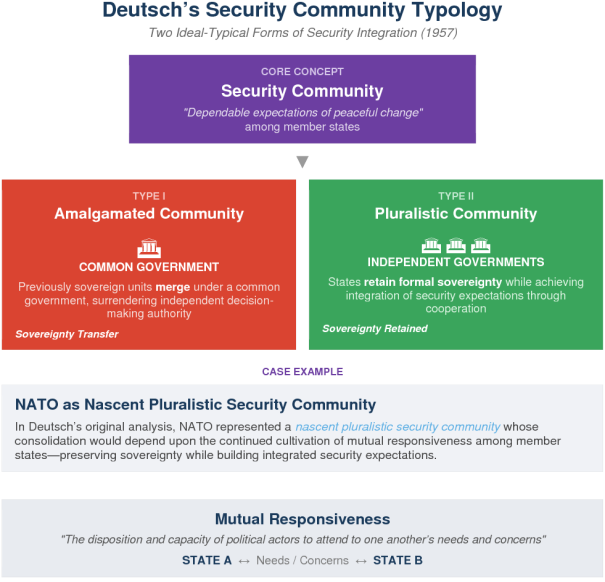
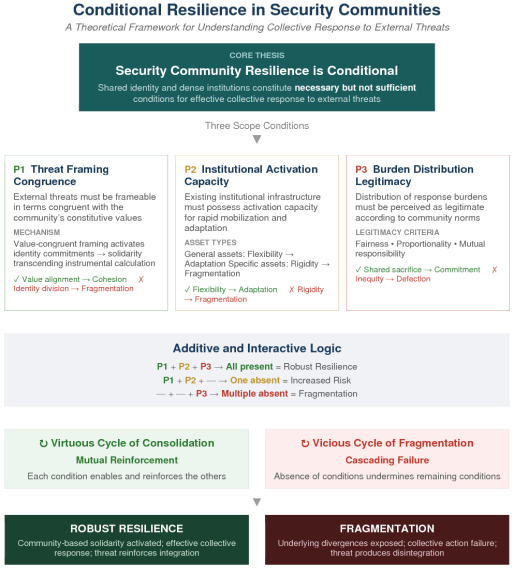




 Share This Article
 Twitter
 Linked In
 Facebook